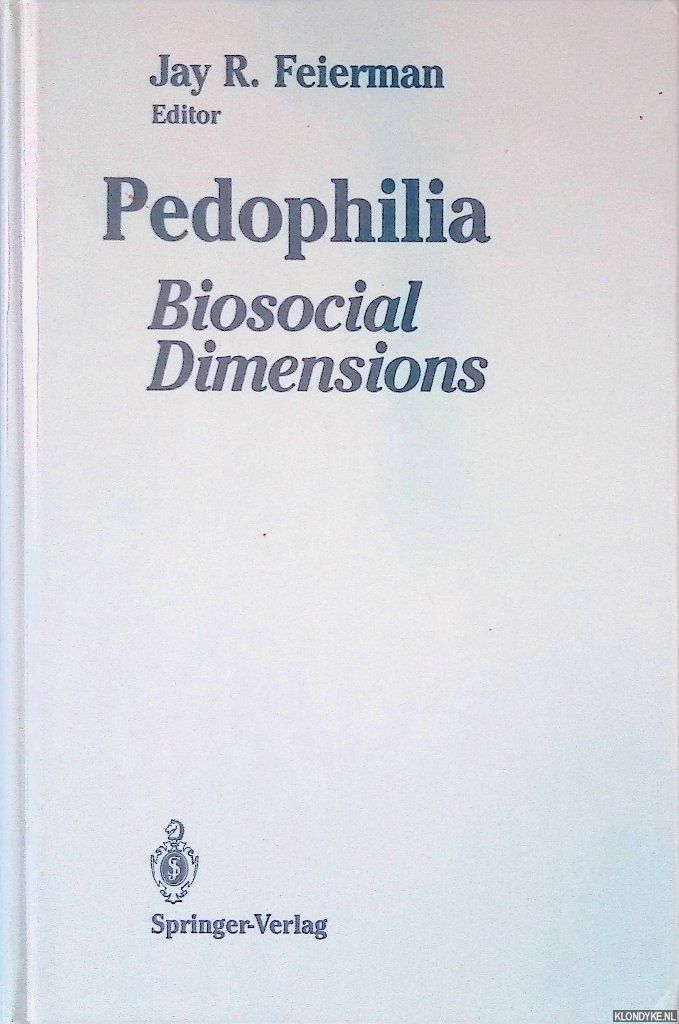
Pedophilia Biosocial Dimensions
edited by Jay Feierman
This book contains new biosocial theory and data as well as comprehensive reviews of the basic science and clinical literature on adult human sexual attraction to and behavior with children and adolescents. Whereas there is a large literature on the biosocial bases of human “sexual orientation,” this book is the first comprehensive biosocial examination of human erotic “age orientation.” Leading researchers from the natural and social sciences show how a cross-cultural, cross-species, and cross-historical approach to adult/nonadult sexual behavior gives new insights into the biosocial roots of human pedophilia as the phenomenon is found in contemporary industrialized societies.
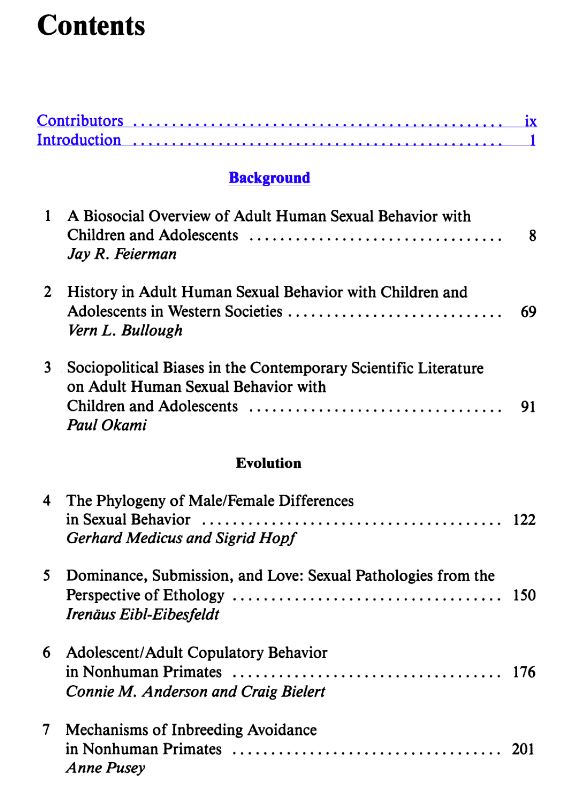
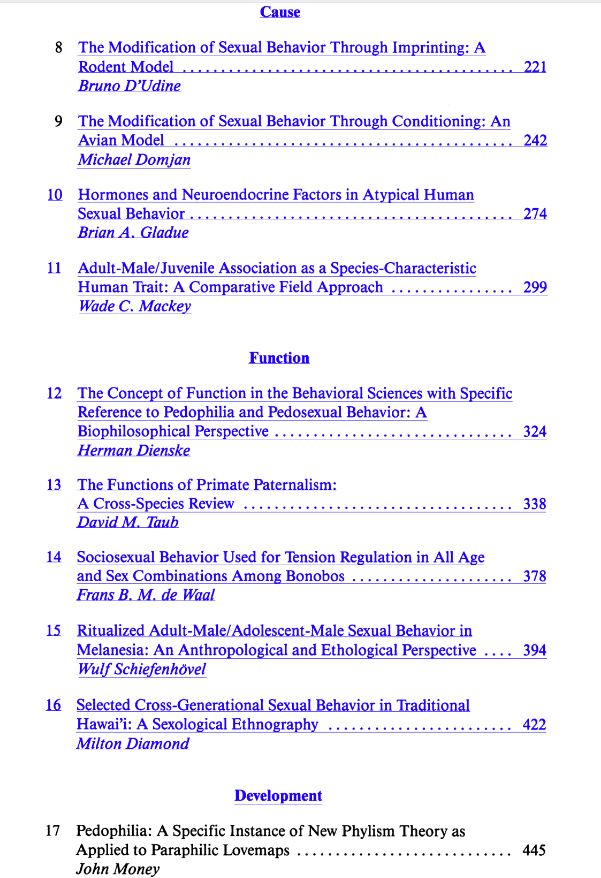
The book is organized around ethologist Niko Tinbergen’s four recommended dimensions by which a behavior should be understood: evolution, cause, function, and development. Using these four dimensions, the contributors to the book examine pedophilia at the levels of the molecule, tissue, individual, family, social group, and society. What are suggested by this multidimensional, multilevel synthesis are new evolutionary, psychological, and behavioral-physiological mechanisms by which this most important but heretofore academically neglected aspect of human sexuality could have evolved in modern societies. The material in the book is much broader than but very applicable to the topic of child sexual abuse.
Written for both students and professionals, “Pedophilia: Biosocial Dimensions” should be of interest to all clinicians who work with adults, children, or adolescents who have been involved in the acting out of pedophilia both inside and outside the family. Developmentalists, educators, sexologists, natural and social scientists, jurists, psychologists, nurses, social workers, clergy, correctional workers, physicians, and others will find material of interest in this book.
https://archive.org/details/pedophiliabiosoc0000unse