Perilous chastity : women and illness in pre-Enlightenment art and medicine
By Laurinda S. Dixon · 1995
From Publishers Weekly : Until the late 17th century, the womb was regarded as discrete and animate. Hungry for male seed, if unsatisfied it wandered the body, causing illness and bodily distress. Known as hysteria or uterine furies, the idea of the denied womb had its origins in the Hippocratic belief in the dangers of sexual abstinence. Women were considered frail from birth, their anatomy predisposing them to weakness and instability. Their health at times their very lives could be endangered by virginity.
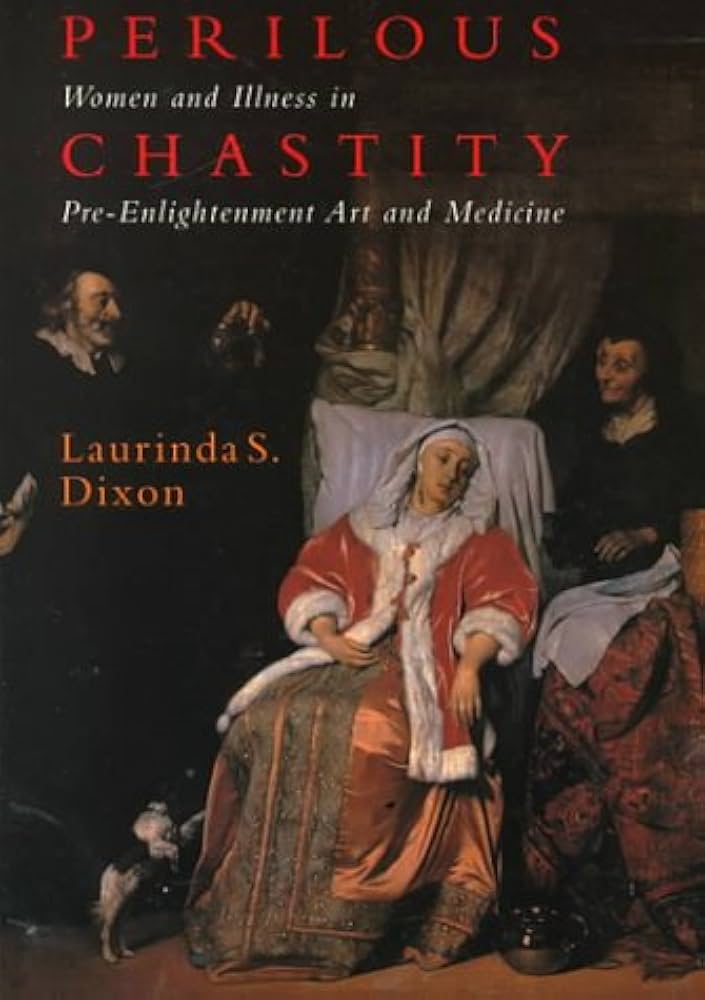
Wonderfully engaging, this unique study shows how art reveals a misogynistic medical establishment’s attitudes toward women. Dixon traces the origins of “hysteria,” richly illustrating her analysis with more than 100 paintings from the 13th through the 18th centuries
Page 13
The physical and mental symptoms associated with uterine disorders are documented in hundreds of medical treatises written over a period of four thousand years. A systematic review of these symptoms would yield many pages of vivid description. The most often mentioned physical indications, however, were stomach and back pains, vomiting, excessive urination, appetite disorders, dizziness, listlessness, weakness, heart palpitations, convulsions, fainting, distended abdomen, swollen feet, headache, pallor, and a weak or irregular pulse. Medical texts from the Renaissance on vividly describe the psychic symptoms as well, the most common of which were weeping, sighing, anxiety, timidity, disturbed sleep, sadness, despair, depression, and violent mood swings. Symptoms such as these were believed to be caused by inflammation, suffocation, or displacement of the womb, or a
Page 16
hurt, the pain is caused by the ‘falling of the womb.'”12 A later Egyptian work, the Ebers Papyrus (ca. 1550 B.C.), recommends cures designed to lure the uterus back into the abdomen as if it were an independent living organism. This was to be accomplished by fumigating the vagina with sweet-smelling vapors to attract the womb back to its proper place or, conversely, inhaling foul-smelling substances-fumes of wax or hot coals-to repel the organ and drive it from the upper parts of the body.”3
In addition to being totally autonomous and mobile, the womb was believed to require nourishment; many of the symptoms suffered by women-depression, hallucinations, pain in various parts of the body – were ascribed to “starvation” of the organ. Accordingly, Egyptian physicians would fumigate the vagina with “dry excrement of men” in an effort to gratify the womb’s “appetite” for sex.” Unlike later Christian physicians, the ancient Egyptians did not invoke prayers and incantations in the treatment of the wandering womb. Rather, they perceived the condition as an organic ailment and treated it with what they considered rational means based on their “observations” of the migratory nature of the uterus.
Page 17
Hippocratic writers noted that the disease seemed to occur primarily in older women who, as widows or spinsters, were deprived of sexual intercourse. They concluded that “if women have intercourse, they are more healthy; if they don’t they are less healthy. This is because the womb becomes moist in intercourse and not dry: when a womb is drier than it should be, it often suffers violent dislocation.””7 In its search for nourishment and moisture, physicians believed, the womb wandered lightly and unimpeded, crowding and compressing the other organs.
…
Since the uterus was an independent entity, remedies for driving it back to the nether regions by placing unpleasant smelling substances to the nose, or luring it back to the abdomen by applying fragrant douches or fumigations to the vagina, were effective only temporarily. Hippocratic texts strongly recommended marriage as the best cure for single women and condemned virginity as unnatural and dangerous.21
Page 20
Galen adhered to many Hippocratic beliefs, synthesizing and modifying them according to his own vision. He believed in the existence of both male and female semen, and maintained that retention, or “repression,” of this substance led to corruption of the blood and cooling of the body in both sexes. He reasoned that the symptoms of hysteria were caused by “repressed semen” and aggravated by sexual abstinence. Galen recognized that hysteria occurred particularly among widows, and above all in those who had been fertile and receptive to the advances of their husbands.