Sex At Dawn – the prehistoric origins of modern sexuality
by Christopher Ryan & Cacilda Jetha
Page 165
When women co-operated, two parts of the brain, both responsive to dopamine, were activated.
Page 282
If our distorted relationship with human sexuality is the source of much of this frustration, confusion, and ignorance, societies with less conflicted views should confirm the causal connection. Developmental neuropsychologist James Prescott found that bodily pleasure and violence seem to have an either/or relationship – the presence of one inhibits the development of the other. In 1975 Prescott published a paper in which he argued that certain sensory experiences during the formative periods of development will create a neuropsychological predisposition for either violence-seeking or pleasure-seeking behaviors later in life.
https://en.wikipedia.org/wiki/Sex_at_Dawn
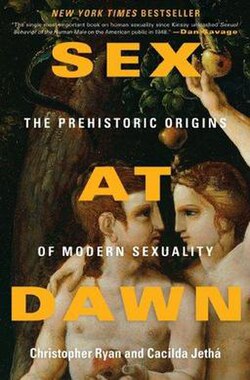
In opposition to what the authors see as the “standard narrative” of human sexual evolution, they contend that having multiple sexual partners was common and accepted in the environment of evolutionary adaptedness. The authors contend that mobile, self-contained groups of hunter-gatherers were the norm for humans before agriculture led to high population density. Before agriculture, according to the authors, sex was relatively promiscuous and paternity was not a concern. This dynamic is similar to the mating system of bonobos. According to the book, sexual interactions strengthened the bond of trust in the groups. Far from causing jealousy, social equilibrium and reciprocal obligation were strengthened by playful sexual interactions.