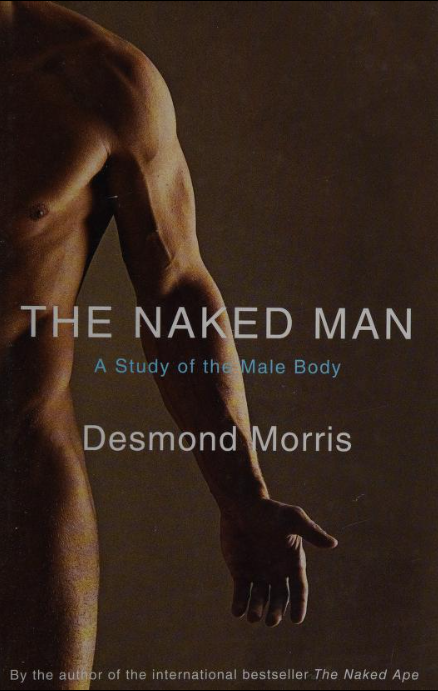
The Naked Man: A study of the male body
by Desmond Morris
It has been argued that the glans at the tip of the human penis has evolved its unusual design as part of a strategy that will help to defeat female infidelity. If a man’s female partner has been unfaithful and is carrying another male’s seminal fluid inside her vagina, it is a great advantage for the male partner to own a penis with an enlarged head that will act as a plunger, squeezing out the unwanted semen.
https://archive.org/details/nakedmanstudyofm0000morr
Chapter 1 The Evolution
The inevitable question arises as to why a paired human female
should take the risk of mating with a strange male when she has
a permanent partner available to her to make her pregnant. If she
is discovered it could clearly cause serious damage to the stability
of her family unit, and yet it does still happen. The reason appears
to be that the human female is programmed to assess human males
in two different ways.
In one assessment, she rates them according
to their supportive qualities. She senses how well they will look
after her and her offspring, and how socially successful and reliable they are.
In the other assessment, she rates them according
to their physical fitness. Do their bodies look as though they will
pass on good genes to her offspring?
In an ideal relationship, the female’s permanent partner will be both reliably supportive and
also physically impressive, and she will have no genetic reason to
stray. But if she has chosen a partner primarily for qualities of
protection and caring, then she may be tempted, from time to
time, to engage in a little risky sexual activity outside the family unit.
Chapter 18 The Pubic Hair
In boys, the very first pubic hairs appear sparsely on the scrotum
or at the base of the penis. A year later, the hairs around the base
of the penis are too many to count, and within three to four years,
hairs fill the pubic area. Unlike the male’s head hair, his pubic patch
never goes bald and never goes grey, as he grows older. So, pubi-
cally speaking at least, he remains forever young.
This distinctive patch of pubic hair acts as an immediate visual
signal indicating sexual maturity and, in the days when we went
naked, could be detected even from a distance. It has been suggested
that this was its primary function during the early days of the human
story, at a time when most of the rest of the ancestral coat of fur
had been lost.
It is certainly true that in pale-skinned races the dark triangle of
hair is highly conspicuous. The argument is less convincing for dark-
skinned people, however, and it seems likely that it had other func-
tions as well. Two have been suggested. One is that the tufts of
hair acted as buffers to prevent skin chafing during the vigorous
and often prolonged pelvic-thrusting of face-to-face copulation.
Bearing in mind that whole cultures have practised depilation of
their pubic regions without any recorded skin damage, this too
seems a little far-fetched.
It is the third function that appears to be nearer the truth. The
suggestion here is that, as with the tufts of hair in the armpits, the
pubic tufts are essentially scent-carriers. There is a powerful concen-
tration of apocrine scent glands in the crotch region and dense hair
there acts as a scent trap for the pheromones they secrete. As with
other parts of the body, tight clothing can easily create problems for
this scent-signalling system, allowing the secretions to go stale and
converting the natural sexual fragrances into unpleasant body odours,
but in the naked, primeval days, when dramatic evolutionary changes
were taking place in our species, it would have worked well enough.
Chapter 19 The Penis
Compared with the penises of other apes, the human penis is most
unusual. It is much longer, much thicker, possesses a strangely
shaped tip, and lacks the penis bone that aids erection. Being such
an oddity, it is hardly surprising that it has been the focus of so
much interest, both academic and pornographic. Dozens of books
have been written about it, taboos have arisen over it, laws have
been enforced about it, and it has been the subject of a million
jokes.
Even in our modern, permissive society, the erect penis remains
one of the most forbidden of all images. Something as intrusive and
intimate as open-heart surgery can be screened on television, as can
pictures of the wounded and mutilated bodies following a bomb
outrage, but the human phallus is still outlawed as obscene. As
someone once summed it up: ‘You can show a gun, that shoots
death, but not a penis, that shoots life.’
For the purposes of this book, this taboo must be swept aside
and, like all the other parts of the male body, the penis must be
examined objectively. First, its basic anatomy.
The average human penis, when fully erect, has a length of 6
inches (15.2 cm) and a circumference of 5 inches (12.7 cm). These
figures are based on the famous Kinsey study of 3,500 American males.
…
The shape of the penis ensures that any seminal fluid already
present will be displaced. It has been argued that the glans at the
tip of the human penis has evolved its unusual design as part of a
strategy that will help to defeat female infidelity. If a man’s female
partner has been unfaithful and is carrying another male’s seminal
fluid inside her vagina, it is a great advantage for the male partner
to own a penis with an enlarged head that will act as a plunger,
squeezing out the unwanted semen. The glans, sitting like a helmet
on the end of the penis, has a protruding rim called the corona or
coronal ridge. As the penis plunges deep into the vagina, any liquid
already close to the cervix will be squeezed back beyond this rim
and then, as the penis is withdrawn, it will be expelled and lost.
Then, when the male partner himself ejaculates, his seminal fluid
will successfully replace the rival male’s fluid. Significantly, at the
very moment of ejaculation, the human male feels a sudden urge
to stop thrusting. This is important because, if he did not stop, he
would be in danger of displacing his own seminal fluid.
…
Intense mutual pleasure gained from extended sexual encounters
would help to cement this human pair-bond. Pelvic-thrusting in a
typical monkey lasts about eight seconds. In human beings it lasts,
on average, eight minutes, or sixty times as long. And it may last
much longer, even up to an hour in some instances. In addition,
the increased width and length of the human penis, stretching and
filling the vagina, would greatly increase female arousal. The design
of the glans, with its fleshy ridge protruding upwards but not
downwards, would provide additional stimulation to the upper or
frontal wall of the vagina, which is precisely where the highly sensi-
tive G-spot is located. Viewed in this way, the human penis becomes
not so much a plunger as a pleasure device, arousing the human
female to an orgasmic level unknown in other primate species.
The feeling of pleasant exhaustion following orgasm usually
results in the female remaining in a horizontal position for a while
afterwards, with little body movement. This is another important
aspect of the human sexual encounter, since a quickly resumed
vertical posture could cause considerable semen loss. It is probably
no accident that the only bipedal primate is also the only one with
an intensely orgasmic female.
To sum up, the large, uniquely shaped human penis and the
uniquely intense female orgasm together create a reproductive system
in which foreign sperm are displaced and the partner’s sperm are
retained. Also, the greatly increased and prolonged sexual arousal
of both partners helps to cement and protect the human pair-bond.
…
Recent findings by American research workers have suggested
that there is something special about the seminal fluid in which the
active sperm are floating. In addition to being the liquid that helps
to carry the sperm up to their destination, it is claimed that it also
has a direct chemical impact on the female body. When sexually
active young females were studied, it was found that those whose
male partners did not wear condoms gained a hitherto unsuspected
benefit. It seems that the semen in their vaginas influenced their
psychological state in some way, making them generally happier
than those females whose partners always wore condoms.
The controversial conclusion was that mood-improving hormones
contained in the semen were being absorbed through the vaginal
walls. This is certainly possible and would make good evolutionary
sense, creating a sense of wellbeing from the indulgence in poten-
tially procreative activities, and therefore increasing the desire to
reproduce. There is, however, a flaw in this conclusion…