Robert Briffault – NZ Papers Past
- Born (April? see below) 1873 in Nice, France (McCray, 2014 had access to personal papers)
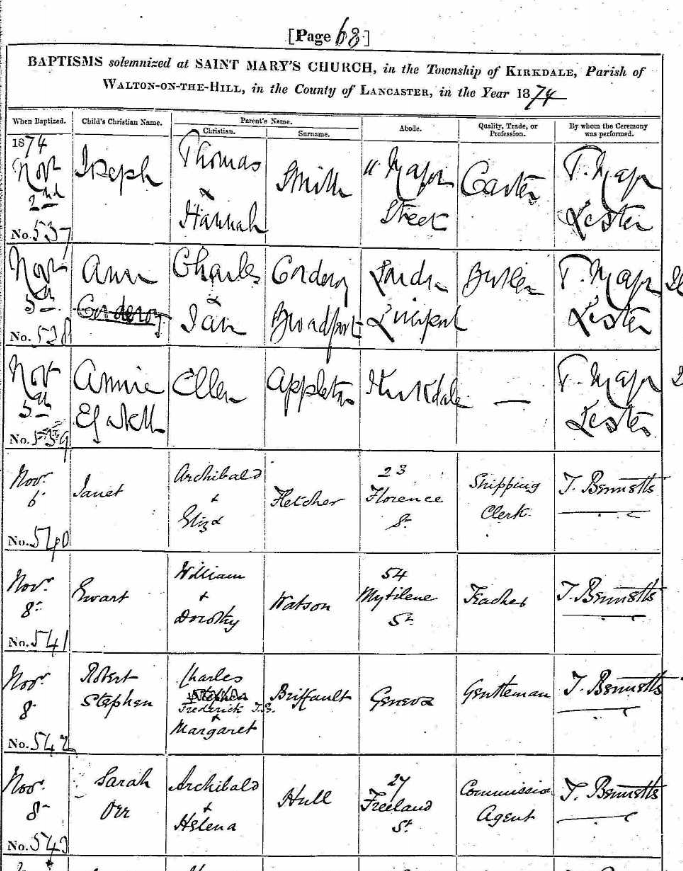
- Baptised Lancashire, England, 8th Nov 1874 (Online Cenotaph), (screenshot from FamilySearch)
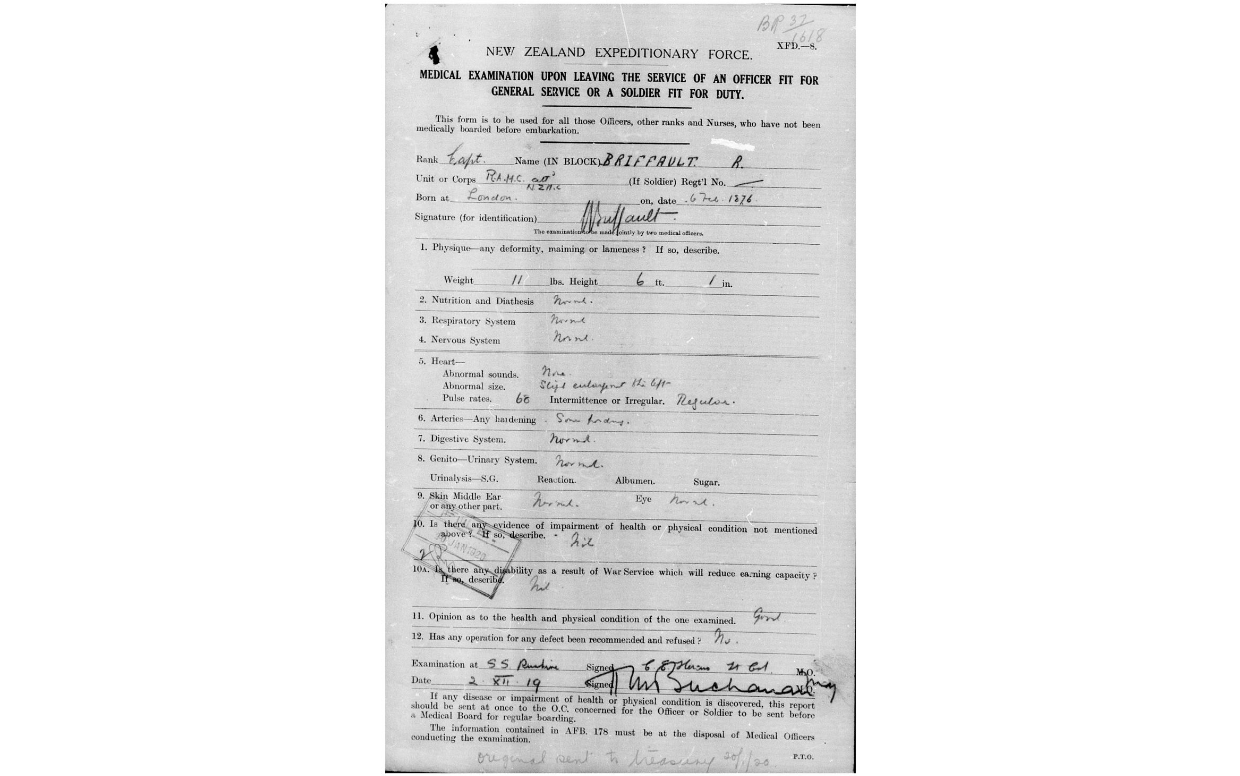
- Claimed birth in London, 6th Feb 1876 (military record / screenshot), (Simon & Schuster), (ref: Luisa Passerini, 1999 deception possibly to enter army)
- Letter from father 9 April 1882 when RB age 9 (so DOB before April 1873 – Luisa Passerini, 1999)
- Came to NZ in 1893 age 20. (NB Online Cenotaph says after death of father in 1887)
- Married Anna Clarke in 1896.
- Muriel born 1900.
- MBChB from Otago in Feb 1901 age 27 (if turned 28 in April). (NB Online Cenotaph wrongly says 1905)
- Formed Rationalists in 1910.
- WW2 leaves for Canada May 1915 age 42
- Resigns from Army, April 1919
- wife Anna dies from influenza, September 1919
- daughter Muriel dies 1925
- Robert dies 1948 aged 72 (if DOB 1876)

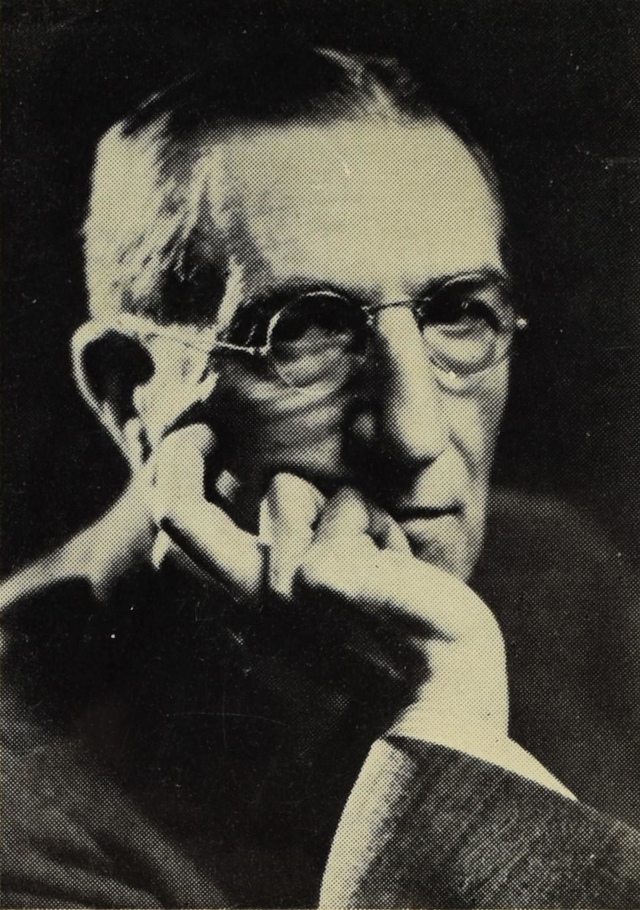
Dr Robert Briffault
UNIVERSITY COLLEGE AUCKLAND.
New Zealand Herald, Volume XXXIII, Issue 10279, 3 November 1896, Page 5
https://paperspast.natlib.govt.nz/newspapers/NZH18961103.2.42
The following are the class-lists of the annual examination so far as at present known. A supplementary list will be published shortly :-
BIOLOGY (Junior)
Class I: R. Briffault, Alice M. Dineen. Class II: J. C. Dromgool, J. C. Mill. (Senior) Class I: Annie M. McPherson, Florence L. Peacocke.
PRACTICAL BIOLOGY (Junior)
R. Briffault, Alice M. Dineen, J. C. Dromgool, L. Wambrough. (Senior): Annie M. McPherson, Florence L. Peacocke, Clara Smith. Honours division: Mabel Luce.
CHEMISTRY
Class I: J. C. Dromgool, K. Pethrus. Class II: R. Briffault, A. R. Crump. Class III: T. G. Hosking, O. H. Low.
PRACTICAL CHEMISTRY
R. W. Allen, R. Briffault, J. C. Dromgool, T. G. Hosking, K. Pethrus, L. Wambrouch.
PHYSICS
Class I: J. C. Dromgool. Class II: R. W. Allen, R. Briffault.
PRACTICAL PHYSICS
R. W. Allen, R. Briffault, J. C. Dromgool, L. Wambrouch.
SINCLAIR SCHOLARSHIP
Miss A. M. D. Dineen has gained the Sinclair Scholarship. Mr. C. S. W. Beesten and Mr. J. C. Mill ran very close in the competition.
The following students will be accredited with having kept the terms of the year, provided that they have fulfilled the regulations of the University of New Zealand:
R. W. Allen, H. D. Bamford, R. Briffault, C. C. Choyce, H. G. Cousin, A. R. Crump,
HOTEL ARRIVALS.
New Zealand Times, Volume LVX, Issue 3038, 27 January 1897, Page 2
https://paperspast.natlib.govt.nz/newspapers/NZTIM18970127.2.5
N.Z. University Senate.
Thames Advertiser, Volume XXIX, Issue 8674, 2 March 1897, Page 2
https://paperspast.natlib.govt.nz/newspapers/THA18970302.2.28
(Press Association.) AUCKLAND, March 1.
The University Senate resumed this morning. On the motion of Sir Robt. Stout the Senate resolved to request the Government to provide an efficient endowment for the Middle District New Zealand University.
The College decided to record the following as having passed the whole medical intermediate examination:- W. A. Robinson, B.A., D. H. B. Bett, G. MacFarland, A. J. Crawford, R. B. Briffault, De Chancel, F. R, Hotop, M. C. Morkane, W. W. Moore, ‘T’ McKibbin, J. G. MacDonald, S. J. Ccok, Helena Baxter, C. C. McAdam, and E, J. McAra.
SCHOOL VACATIONS.
Otago Daily Times, Issue 10990, 20 December 1897, Page 4
https://paperspast.natlib.govt.nz/newspapers/ODT18971220.2.36
S. HILDA’S COLLEGIATE SCHOOL [FOR GIRLS, Leith St. Dunedin]
At the invitation of the Sisters of the Church about 50 ladies and gentlemen assembled at S. Hilda’s Collegiate School on Saturday evening on the occasion of the annual distribution of prizes to the students…
The Rev. Canon Richards read the following report:—
During the year 24 new pupils have been enrolled, of whom 10 were boarders. The general health has been excellent. In addition to the original staff, we have been fortunate in securing the services of Mr Briffault, who has conducted classes in the upper school in science, Latin, and mathematics. Next year he will also take French, as Mrs Fitzclarence Roberts (who has so kindly assisted us this year) feels unable to continue her work with us, owing to her increasing private engagements. Under her tuition the girls have made decided progress, and the French examination conducted by her produced very satisfactory results. We are glad to report that three of the girls—Daisy Aston, Laura Basstian, and Kitty Leary—received medals for excellent work in examination papers, and four others obtained certificates at an exhibition of the work of the schools of the Church Extension Association throughout the world, held at Wordsworth College, London. As this is an annual exhibition, we shall endeavour to encourage the children to continue their entries.
At the request of the Vicar of St. Matthew’s, we consented to undertake the management of the day school of that parish, and have spared Miss Ellison from S. Hilda’s to fill the post of head mistress, for which position she is eminently qualified. She, however, has continued to instruct and supervise our kindergarten class on certain days. Mr Briffault kindly consented to examine the upper form of this school in arithmetic, grammar, composition, history, literature, geography, Latin, algebra, Euclid, and science, the result of which he pronounced on the whole extremely satisfactory and the standard of work good. Out of 15 girls, five obtained first-class marks, viz:—Daisy Aston, Dorothea Easther, Hilary Clulee, Ivy Allen, and Louisa Gillies. The rest, with two exceptions, passed second class. Out of the two who failed, one has been absent through illness for a considerable time. Mr Briffault remarked that in arithmetic all the girls showed excellent proficiency. The history and literature also received special commendation, several girls having produced exceedingly good papers.
The following is quoted verbatim from his report:—”Viewing the results as a whole, I feel that, although no one girl has obtained exceptionally high marks, the general level of the marks is extremely good, as is strikingly shown by the fact that only one pupil who has attended throughout the year failed to obtain the minimum number of 40, and that by only a few marks. This I consider is a result which should prove gratifying to the teachers. Every paper shows evidence of conscientious work and conscientious training. One thing is not shown in the list of marks obtained; and it is one on which the school is to be congratulated—I mean the neatness and care which is so striking a feature in the work of every girl.”
It has been a great satisfaction to us to receive the unbiassed opinion of one who has had large scholastic experience, and whilst looking forward in the future to still greater excellence in work from our girls, still, as the school has only completed its second year, we feel that its present attainments are on the whole a source of thankfulness to us.
NEW ZEALAND UNIVERSITY.
Otago Daily Times, Issue 11958, 4 February 1901, Page 3
https://paperspast.natlib.govt.nz/newspapers/ODT19010204.2.6
New Zealand University: The Medical Examinations
The professional examinations of the New Zealand University for the medical degree M.B., Ch.B., were concluded on Friday, after extending over a period of 10 days. It has been unofficially reported that the following gentlemen have been successful: R. N. Adams, jun., F. A. Bett, R. Briffault de Chancel, S. J. Cook, W. W. Moore, C. M. Morkane, J. B. Sale, W. M. Shand.
PORT OF ONEHUNGA.
Auckland Star, Volume XXXIV, Issue 89, 15 April 1903, Page 4
https://paperspast.natlib.govt.nz/newspapers/AS19030415.2.35.11
Takapuna. s.s .. Grant. from the South.
Passengers: Misses Laver, MeGill, Forsey, Fitszimmons, Brooks (2), Flanagan (3), Sing, Andrews, Morrison. Laing, Smith (2). Dixon, HIolmes, Tirisa, Mesdames McGill, Ferguson, MeCarthy, Gilling aud infant. Briffault (2) and child, Paisons, Malcolm, …
The s.s. Takapuna arrived from the South at 10 o’clock this morning. She left again for New Plymouth and Wellington at 3 o’clock this afternoon.
MEETINGS & ENTERTAINMENTS
Auckland Star, Volume XXXVII, Issue 201, 23 August 1906, Page 3
https://paperspast.natlib.govt.nz/newspapers/AS19060823.2.34
FRENCH CLUB.
The President (M. Boeufve) at the meeting of the French Club on Tuesday night announced that he had received a large and valuable collection of books (105 altogether) from Dr. Briffault, including the works of some of the best French authors, including Bossuet, Chateaubriand, Racine, Voltaire (edited in Bale in 1789), Sainte-Beuve, Saint-Simon, Ernest Renan, Duc de Broglie, Pierre Loti, and others.
He expressed the opinion that Auckland would soon possess the finest French library in the colony. He proposed that in recognition of such a princely donation, the title of “Membre d’Honneur” of the club be conferred on Dr. Briffault. This proposal was agreed to with acclamation.
INQUEST ON THE CHILD.
Auckland Star, Volume XXXVIII, Issue 31, 5 February 1907, Page 3
https://paperspast.natlib.govt.nz/newspapers/AS19070205.2.6
DAILY MEMORANDA.
New Zealand Herald, Volume XLIV, Issue 13508, 5 August 1907, Page 4
https://paperspast.natlib.govt.nz/newspapers/NZH19070805.2.15
LECTURE: Auckland Institute – “Science and Metaphysics”, by Dr. R. Briffault, 8 p.m.
CANCER AND US PROBLEM.
Auckland Star, Volume XXXIX, Issue 185, 4 August 1908, Page 7
https://paperspast.natlib.govt.nz/newspapers/AS19080804.2.51
AN INTERESTING RESUME.
Dr. R. Briffault’s lecture last night at the Auckland Institute on “The Problem of Cancer,” demonstrated to an interesting degree the powers and limitations of science at the present time regarding this dread and apparently increasing scourge.
Explaining the protozoic, or single cell organism, which is the first organic evolution from the protoplasm, the lecturer led his hearers to an appreciation of man’s highly developed organism, which contains something like a total of 26 billion cells, 10 billions of which are actual living cells, each possessing all the functions of the man himself. But through aeons of time, centralisation of function had developed among these cells, each particular set doing its own work to the general benefit, but all being interdependent.
Now, the most eminent biologists had come to the opinion that cancer was a reversion of the normal working—that for some reason the links between certain of the individual cells became cut, and from being part of a solitary organism, the cell began an independent existence. Its individuality, once established, became greatly exaggerated, and its activities, no longer concerned in the general interest, became egotistic, and preyed upon the body. How this individuality originated was still a moot point, but research pointed to a favouring of this exaggeration of independent activity by local irritation, but an irritation not sufficient to influence the whole organism.
The opinion was once common that the disease was peculiar to civilised man, but it was known now that cancer was common to all vertebrate animals, except, perhaps, reptiles, though it was also known that it could not be transferred from one organism to another. Therefore, it was not contagious. It was doubtful, said the doctor, if it were ever transferred from man to man. Cancer was often associated with senility, but at the present time the evidence was very much against the parasite theory. All the facts of the disease were against it.
But much as had of recent years been discovered respecting cancer, all that was known suggested no remedy. The only satisfactory combatting of it was when it was diagnosed in its early stage, and the tumour excised. The prevalent idea that it was painful was only true of the latter stage of the disease—when it was too late to eradicate it. In its early stage there was no pain, and it was, therefore, all important that any suspicious indication should be diagnosed.
In answer to questions as to why, with the advance in scientific research, cancer was still alarmingly on the increase, and as to what influence food had in its development, the lecturer replied that it was extremely difficult to estimate the reality of the supposed increase, as so much depended on diagnosis. Doubtless many of the conditions of modern life fostered it, but knowledge on the subject was too vague to enable an exact and reliable estimation.
As for the influence of food, cancer had been persistently attributed to the eating of animal food, to eating tomatoes, bananas, to alcoholic drinking, etc.; but there was no evidence to show that these theories were based on positive or on sound grounds. Such statements did not bear impartial analysis. It was possible that animal food favoured it; it was possible the nervous worry and exhausting conditions, the thousand and one accidents, the great strain generally of modern life, loosened the bonds that maintained the balance and integrity of our organisms. But there was not yet anything known sufficiently definite to enable science to say what was the chief contributing cause—cancer was still to a large extent a dread enigma.
CANCER.
Dominion, Volume 1, Issue 2631, 5 August 1908, Page 5
https://paperspast.natlib.govt.nz/newspapers/DOM19080805.2.17.7
CANCER.
ITS CAUSE AND CURE.
(BY TELEGRAM. — SPECIAL CORRESPONDENT.)
Auckland, August 4.
The recently reported discovery of the cancer parasite by Dr. Doyen is largely discounted by a local doctor, Dr. Briffault, who lectured before the Auckland Institute last night.
Wherever accurate popular knowledge on questions of health and disease existed, said Dr. Briffault, it has proved of inestimable benefit in the cause of humanity, and rendered the efforts of the healing sciences more efficient and more easy. He instanced knowledge of the antiseptic treatment of wounds and of the main facts relating to consumption and typhoid.
In the case of cancer, he went on, it was no exaggeration to say that the mortality from the disease would be reduced by over 80 per cent. if the general public was educated up to the knowledge of a few of the facts concerning it. Some years ago the theory that cancer was due to a parasite was almost universally held, but in the present day the best authorities were nearly all unanimous in rejecting this assumption. All the facts of the disease were against the parasite theory. Cancer was a purely local and limited disturbance, and removal of the primary forms, if recognised early enough, cured the disease.
“All living animals,” continued Dr. Briffault, “consist of cells, and the vast majority consist of one cell only. These are called protozoa. The human body consists of ten billion cells. These work together, owing to a perfect automatic system of a division of labour. Every cell has, nevertheless, a mind of its own, and as a rule the interests of an individual cell are the same as those of the body generally. In certain circumstances, however, such as continued local irritation, the individuality of the cell becomes exaggerated under the pressure of its need for self-defence.
Imagine a large drilled army in the field,” continued the lecturer, illustrating his point. “The general in command is continually receiving messages as to the position of the enemy, and what is going on in every part of the field, by telegraph or some other means, and every soldier acts under the direct command of his officers. All action is a concerted attack, the whole army acting as one organism. But suppose the same army in camp, and suppose a couple of marauders from the enemy attacked one soldier. Will he report to his commanding officer and ask for orders? No, he will just act as a man in self-defence.
Popular notions that cancer is associated with certain localities, or that there is any connection between it and the eating of tomatoes, or bananas, or the drinking of beer, have no evidence whatever to support them. There is no definite evidence that it is hereditary, and it is not contagious. There is no medical difference between innocent tumours and malignant cancer. The one may pass into the latter. It is a most pernicious notion that cancer is always painful. It is so only in the latter stages, when it has passed beyond the help of surgery. The only cure at present known is removal, following upon early diagnosis, which often is only possible by microscopic examination. Operations for cancer are now much more thorough than they used to be, consequently the percentage of permanent cures is far higher than formerly.”
Referring to the announcement which appeared a few days ago in the newspapers, that Dr. Doyen had discovered a parasite of cancer, the lecturer said that Professor Doyen was a most distinguished surgeon, but that he was noted for having a weakness for sensational and unguarded statements. It was not long since he mentioned that he had discovered a cure for consumption, although a committee of inquiry set up to examine his claims had proved it to be wholly unfounded.
ENTERTAINMENTS.
New Zealand Herald, Volume XLVI, Issue 14097, 26 June 1909, Page 5
https://paperspast.natlib.govt.nz/newspapers/NZH19090626.2.26
UNITARIAN SOCIAL EVENING.
The first social of the winter series was given in the Unitarian Church on Thursday evening, there being a large attendance. Dr. Briffault occupied the chair, and a first-class programme of vocal and instrumental music was provided.
The Unique Vocal Quartet party (Messrs. Abel Rowe, A. G. Fogerty, Jas. Lonergan, and Karl Atkinson) contributed unaccompanied part-songs in admirable style, creating much enthusiasm. Songs were also given by each member of the quartet, all of which were heartily applauded.
Mr. Alf. Bartley and Miss E. Whiting gave an excellent interpretation of a duet for organ and piano. Mrs. Abel Rowe played a zither solo in an artistic manner, and also delighted the audience by singing several contralto solos, accompanying herself on the zither.
During an interval refreshments were handed round, and at the conclusion of the concert a hearty vote of thanks to the performers for the enjoyable evening provided was carried with much applause.
MEETINGS.
New Zealand Herald, Volume XLVI, Issue 14101, 1 July 1909, Page 3
https://paperspast.natlib.govt.nz/newspapers/NZH19090701.2.6
YOUNG PEOPLE’S SOCIETY.
The Unitarian Young People’s Society met on Tuesday evening. Mr. F. C. R. Munro presided. Papers were read by Mr. W. Moore, “Cable-working:” Rhodes, ” Some Properties of Water;” Mir. H. Stevenson, ” Experiments;” the Rev. W. Jellie, “Radium.” A lecturette by Dr. Briffault, on ” What Animals are Made Of.” concluded one of the most interesting and instructive meetings the society has held this season.
AUCKLAND INSTITUTE.
New Zealand Herald, Volume XLVII, Issue 14307, 1 March 1910, Page 7
https://paperspast.natlib.govt.nz/newspapers/NZH19100301.2.93
THE ANNUAL MEETING
The annual general meeting of the Auckland Institute was held last evening, Professor C. W. Egerton, president of the institute, presiding.
The balance-sheet showed that during the year the expenditure of the institute had been £1209 11s 8d. and there was now a credit of £256 19% 11d.
Nine meetings had been held during the year, when various papers were read and discussed. It was estimated that 19,399 people had visited the museum on Sundays, the greatest attendance being 847, on December 26. The number of visitors during the whole year was 78.051. which was only 2094 short of the number the previous year, when the American fleet visited Auckland.
SNIP
The following officers were elected for the ensuing year :- President. Dr. R. Briffault ; vice-presidents, Professor C. W. Egerton and Mr. E. V. Millar : members of council (in place of those retiring). Messrs. John Reid, James Stewart, and J. H. Upton, and Professor F. D. Brown; auditor, Mr. W. Gorrie (re-elected).
“THE NATURE OF LIFE.”
Auckland Star, Volume XLI, Issue 133, 7 June 1910, Page 7
https://paperspast.natlib.govt.nz/newspapers/AS19100607.2.67
AUCKLAND INSTITUTE LECTURE.
At St. Andrew’s Hall, Dr. Briffault, president of the Auckland Institute, delivered a lecture on “The Nature of Life.” Organic life he likened to a steam engine, and inorganic life to the materials which went to build it. But just what the impulse, the special value, or the exact determination was that was responsible for conscious life, or even physical life, was beyond the scientist to say.
Harvey discovered the circulation of the blood, but neither Harvey nor anyone else had ever explained what caused that circulation. The contracting action of the muscles of the heart was one of the most puzzling and insolvable physiological questions that had ever faced the scientist. After dealing with the various properties associated with the phenomenon of life by the different schools of thought, the lecturer pointed out that neither the purely mechanistic nor the “vitalistic” theories would satisfy the great equation.
The one abiding quality with which the organic was inseparably associated was the metabolic one—so soon as chemical composition ceased to change, organic life ceased. Metabolism, not protoplasm, was the real distinguishing feature of life. For the properties of life were not stored up in a chemical compound. If such were the case, and the mere property of assimilation by eating was the essential, there was no reason to believe that we could not store up energy and be practically able to preserve the properties of life for an indefinite period. But such, of course, was not the case. So soon as the flux was interrupted, life itself ceased.
Dr. Briffault proceeded to expound the development of organic substance from the protoplasmic cell, the functions and phase of the phenomena of the fundamental vitality, and the mysterious application of impulse, which together were responsible for the phenomenon of conscious life and individual form.
At the close of the lecture a very hearty vote of thanks was accorded the president for his intensely interesting and instructive address.
LOCAL AND GENERAL NEWs
New Zealand Herald, Volume XLVII, Issue 14389, 7 June 1910, Page 4
https://paperspast.natlib.govt.nz/newspapers/NZH19100607.2.18
In opening the 43rd session of the Auckland Institute last evening, Dr. Briffault urged its claims to the interest and support of the public. That support, he said, fell short by a good deal from what it should be. The membership of the institute was absurdly inadequate; it should be tenfold what it is.
The Auckland Institute was the administrator of the Auckland Museum, and for that reason, if for no other, it should receive the active support of every prominent citizen. The library of the institute already constituted the most important scientific library in the province, if not in the Dominion; and, thanks to the public-spirited action of the late Mr. Mackechnie, it was constantly receiving supplies of the latest works in every field of scientific and philosophical literature, in the selection of which not only the interests of the student and worker, but also those of the general educated reader were kept in view.
“But it is not chiefly upon those tangible advantages,” proceeded Dr. Briffault, “that I would lay stress.” The aim, he said, of the institute was to promote by every possible means the interest of scientific, of philosophical, of all serious thought, and to form a bond that shall draw together and afford mutual help and encouragement to all those amongst us who were solicitous of those objects.
Now, the community could not afford to neglect or be indifferent to scientific thought. If, like Gallio, we care for none of those things, if, as a community, we neglect, despise, and put from us the spirit of scientific thought and inquiry, it was at our peril. Science would probably not suffer, but the community would — not in mental development only, not in the stuff and quality of their lives alone, but in their pockets, in their most material interests.
The connection might not be seen, but it was a law no less inflexible than the law of gravity, that the place of nations, the place of communities in our civilisation, the security of freedom, of prosperity, and of good government depended upon enlightenment, upon the range and power of their scientific thought. In concluding his remarks, Dr. Briffault urged the community to put aside the delusion that technical education could ever operate as a substitute for pure science; that was the wisdom of him who killed the layer of golden eggs.
LETTERS TO THE EDITOR.
New Zealand Herald, Volume XLVII, Issue 14459, 27 August 1910, Page 4
https://paperspast.natlib.govt.nz/newspapers/NZH19100827.2.5
THE THEORY OF EVOLUTION.
Sir, — Referring to Dr. Briffault’s letter in today’s Herald, under the above heading, I would like to mention that, with the view of comparing the first chapter of Genesis with the geological record, I recently tabulated, on a true scale from the Encyclopaedia Britannica, the various strata with notes of the fossil remains found in each. On comparing the result with Genesis I., I was struck with the confirmation which it afforded of the Bible narrative, except only in one important particular, viz., that Genesis I. places the creation of the vegetable kingdom (including the higher orders of plant life) on the third day, or two “days” before the creation of marine life.
The geologic proof, to my mind, was clear that the oceans were teeming with animate existence before there was any trace of organic vegetation in the earth. How, then, was this serious discrepancy to be accounted for? It is true that there are vast deposits of graphite in the lowest strata, which, according to the Encyclopaedia Britannica, are regarded by geologists of the highest repute as of probably organic origin, but from which all trace of organic structure has been obliterated in the vast lapse of time. But the apparent non-existence of the higher forms of plant life in rocks of much later date—notably the coal period—still remained to be accounted for.
If the Word of God is not true from the beginning, and the foundation unworthy, we might as well give up the superstructure which is reared upon it. But it will surely be admitted that He who gives an account of a matter must be allowed to explain His own meaning. It is St. Peter who, referring to the creation, bids us remember that “one day is with the Lord as a thousand years,” and in another place we are told that a thousand years, in His sight, are but as a “watch in the night when it is past.” So, then, the Bible itself teaches that a mere fraction of a literal day of 24 hours may be commensurate with an extremely lengthened period of time.
As might be expected, the account of the creation in Genesis I. is extremely condensed, and in the following chapter we are expressly told, in reference to the vegetable creation, that it refers to “every plant of the field before it was in the earth, and every herb of the field before it grew, for the Lord God had not caused it to rain upon the earth, and there was not a man to till the ground.” The essential act of creation (as even the most materialistic must admit) consists rather in the planning or conceiving in the mind than in the actual materialisation of that which is thus conceived or designed, just as an architect may be said to create a building when his designs for the structure are fully prepared and elaborated. Thus, in the second chapter of Genesis we are clearly taught that the superior orders, at least, of the vegetable kingdom were held in abeyance until the time was come for the advent of the higher order of mammals, and of man, for whose service and sustenance they were specially designed.
While it is true that the record graven in the rocks proves that there has been a progressive development of animated beings upon the earth, it disproves, at the same time, the theory of evolution in its stricter sense, namely, that the higher species have been gradually developed from the lower. There is no greater authority in geologic science than the late Sir Charles Lyell, and on page 98 of his popular “Elements” he has recorded in the most emphatic manner his conviction that there is no intergrading of species exhibited in the geologic strata. “The law,” he says, “which governs the creation and extinction of species seems to be expressed in the words of the poet (Ariosto): ‘Nature made him, and then broke the die.'”
If only in scientific matters we would be content with ascertained facts, instead of accepting the theories and deductions which have been made from them by sceptics, we would hear far less about the so-called “discrepancy” between science and the Bible. For example, when some human remains are unearthed from under a great pile of debris and alluvial matter, immediately these “learned” gentlemen begin to talk about the vast antiquity of man—18,000, 50,000, or 100,000 years, according to the elasticity of their imagination—whereas, to one who takes the Bible for his guide, it only furnishes a fresh proof of the historic deluge.
HENRY GOUK. 13, Vincent Street, August 23.
Sir, — Dr. Briffault’s letter deserves to be read carefully by other writers in your columns. He very justly refrains from laying all the blame for the mid-Victorian opposition towards evolution at the door of theology. The important attitude of Bishop Wilberforce and others raised a cloud of dust, but only ignorance can attribute similar attitudes to the more thoughtful exponents of Christian doctrine. Dr. Hort, for example, was in a frame of mind entirely different from his brother-Churchman.
I am sure Dr. Briffault will pardon me if I remark that he is scarcely fair to the theologians of yesterday when he says that theological authorities now regard Gladstone’s line of apologetics as one not to be recommended. Neither now nor at the time when the work appeared could theologians bestow unstinted praise. The reference of the title has a misleading effect.
There is one aspect of the controversy to which Dr. Briffault has not referred, and, in my judgment, it has too often been overlooked. Evolution in the closing half of the 19th century was hampered by the needless baggage of agnosticism and materialism. Men of the intellectual and moral worth of Darwin, Huxley, and Spencer were the protagonists of evolution. Everybody was hearing about it, and, unfortunately, many associated it with the philosophical speculations of these men. Spencer rested the sympathetic philosophy upon what he called first principles. These so-called first principles led him to the unknowable. This unknowable and the Christian revelation are mutually exclusive.
Huxley was a brilliant champion of evolution, but readers of his works cannot veil the materialisms which, though involving him in repeated self-contradictions, are too pronounced not to be felt and noticed. The bearing of the foregoing will be at once perceived. It can never be an act of wisdom to lightly set aside so great and sacred a duty as belief in God. In the hands of eminent men evolution seemed to involve this consequent. Need we marvel if there was a considerable demur.
A change has come over the thought of our time. This change is frequently attributed to theologians, and that with a sneer. I think it is imperative to note that the presentation of evolution has also changed. Hence more sympathy should characterise the references to the controversy on both sides. Spencer himself came at last to the point of inviting his readers to go on with his works without worrying over the first few chapters; thereby he clearly showed that agnosticism is not a postulate of evolution.
Theologians have not changed in their view about the essential contradictories of much of the metaphysics seen in the writings of these eminent evolutionists. Their “materialisms” and their protest against theism are rejected with as much vigour as ever, and in so far as evolution has been seen to stand in no need of these excrescences, so far has it commanded the respect of theologians.
ROBERT STEWART. The Manse, Onehunga.
MEETINGS.
New Zealand Herald, Volume XLVII, Issue 14445, 11 August 1910, Page 3
https://paperspast.natlib.govt.nz/newspapers/NZH19100811.2.8
Rationalist Association Formed
A meeting was held in the Federal Hall last evening for the purpose of forming an association for the promotion and defence of rational thought. Dr. Briffault occupied the chair, and there was a good attendance.
It was decided to form a society under the title of the Auckland Rationalist Association. All present were enrolled as members. The following were the office-bearers appointed:
President: Dr. Briffault
Vice-Presidents: Dr. J. Giles and Mr. Boden
Committee: Messrs. Healy, Ingram, L. Mores, T. Bloodworth, R. A. Singer, S. I. Clarke, and Mrs. G. Kemp
Hon. Secretary: Mr. G. Kemp
Hon. Treasurer: Mr. E. S. Jupp
The subscription to the association was fixed at 5s per annum for men and 1s for women. A general business meeting will be held next Wednesday evening.
Rationalist Association
Page 6 Advertisements Column 1
New Zealand Herald, Volume XLVII, Issue 14463, 1 September 1910, Page 6
https://paperspast.natlib.govt.nz/newspapers/NZH19100901.2.98.1
The subjects, “Education and Efficiency” and “What is Rationalism,” are to be spoken on by the Chief Justice (Sir Robert Stout) and Dr. R. Briffault, respectively, at an open meeting of the Auckland Rationalist Association, to be held to-morrow evening at the Federal Hall.
Page 9 Advertisements Column 1
Observer, Volume XXX, Issue 51, 3 September 1910, Page 9
https://paperspast.natlib.govt.nz/newspapers/TO19100903.2.17.1
The newly-formed. Rationalist Association announce a general meeting at the Federal Hall on Friday evening next, September 2. Addresses will be delivered by Sir Robert Stout and Dr. Briffault.
Page 8 Advertisements Column 2
New Zealand Herald, Volume XLVII, Issue 14495, 8 October 1910, Page 8
https://paperspast.natlib.govt.nz/newspapers/NZH19101008.2.86.2
A meeting of the Auckland Rationalist Association was held in the Chamber of Commerce last night, when Mr. Scott-Bennett delivered a lecture on “Christ and Modern Thought.” At the close several questions were asked by members of the audience, and elicited able replies from the lecturer. Dr. Briffault, president, occupied the chair.
MEETINGS.
New Zealand Herald, Volume XLVII, Issue 14561, 24 December 1910, Page 4
https://paperspast.natlib.govt.nz/newspapers/NZH19101224.2.7
“THE EVOLUTION OF MYTHOLOGY.”
An address was given by Dr. R. Briffault in the National Chambers last evening under the auspices of the Auckland Rationalist Association, the subject being “The Evolution of Mythology.’
THE AUCKLAND MUSEUM.
Auckland Star, Volume XLII, Issue 50, 28 February 1911, Page 9
https://paperspast.natlib.govt.nz/newspapers/AS19110228.2.93
THE AUCKLAND MUSEUM
ANNUAL MEETING OF INSTITUTE
GRATIFYING INTEREST BY PUBLIC
The forty-third annual meeting of the Auckland Institute was held at the Auckland Museum last evening. The president (Dr. R. Briffault) occupied the chair, and there was an attendance of over twenty.
The annual report showed that 32 new members had been elected since the last meeting, a number considerably above the average. The net increase was 18, making the total on the roll 204. The council trusted that the increase would be maintained, as the chief aim of the Institute—the maintenance of a free public museum for the instruction and recreation of the people of Auckland—was one that appealed to all classes and should command a liberal amount of support. SNIP
THEY SAY
Observer, Volume XXXII, Issue 9, 11 November 1911, Page 7
https://paperspast.natlib.govt.nz/newspapers/TO19111111.2.11
-That Dr. Briffault, president of the Rationalist Association, lives next door to a church. What irreverent onlookers now want to know is whether the church is trying to convert the doc, or the doc is trying to convert the church.
AUCKLAND ST. HELENS HOME
Press, Volume XLIX, Issue 14571, 23 January 1913, Page 7
https://paperspast.natlib.govt.nz/newspapers/CHP19130123.2.74
Auckland St. Helens Home
(Press Association Telegram.)
AUCKLAND, January 22
The enquiry into the administration of St. Helens Maternity Home was continued this morning before Mr. C. C. Kettle, S.M., commissioner.
Dr. Robert Briffault said he did not consider that a duly qualified midwife should be allowed to insert sutures unless under the authority of a medical man and in his presence. This was, of course, excepting in rare cases, where the services of a medical man were entirely unobtainable, as in the backblocks.
Mr. Skelton quoted the general rules for the administration of State maternity hospitals, and submitted that the matron’s action in inserting sutures was, to say the least of it, a distinct breach of the rules of the Home.
Continuing his evidence, Dr. Briffault said that the insertion of sutures by the matron was a common practice in maternity homes, and though he emphatically condemned it, he agreed that the matron had plenty of precedent in treating Mrs. Chamberlain in the manner described. Dr. Briffault said that if the death rate at St. Helens was less than one — half per cent., the figure was a very creditable one.
BIBLE IN TIE SCHOOLS
New Zealand Herald, Volume LI, Issue 15654, 7 July 1914, Page 9
https://paperspast.natlib.govt.nz/newspapers/NZH19140707.2.105
OPPOSITION TO REFERENDUM
A meeting of supporters of the present system of school education was held last evening in the Grafton Library, to meet the Rev. T. A. Williams, the national organiser of the Schools Defence League. The Rev. Steele Craik presided over a small attendance.
The chairman outlined the objects of the Schools Defence League, which, he said, aimed at preserving the present free, secular, and compulsory school system of the Dominion. He criticised at length the programme put forward by what he characterised as the “so-called Bible-in-Schools League.”
The Rev. T. A. Williams said that the Schools Defence League had been started to stir up interest in regard to the attack which was being made on the present system of education. That system made for liberty, brotherhood, and democracy. The small number present that evening was an indication of the apathy on the question. Indifference was the enemy…
[SNIP]
On the motion of Mr. A. B. Donald, seconded by Dr. Briffault, it was decided that the meeting should strongly protest against the Religious Instruction Referendum Bill now before the House, and deplore the fact that the Minister for Education should have inserted in the Bill the exact form of ballot paper requested by the Bible-in-Schools League.
PERSONAL ITEMS.
New Zealand Herald, Volume LII, Issue 15920, 18 May 1915, Page 9
https://paperspast.natlib.govt.nz/newspapers/NZH19150518.2.112
Dr. R. Briffault. of Auckland, leaves for Vancouver by the Niagara to-day en route for England, in order to offer his services to the Imperial authorities.
MEN ON ACTIVE SERVICE.
New Zealand Herald, Volume LII, Issue 16071, 10 November 1915, Page 8
https://paperspast.natlib.govt.nz/newspapers/NZH19151110.2.84
Lieut. R. Briffault, R.A.M.C., Auckland, went out to the Dardanelles in charge of detachments of 14 different regiments, and he was at the landing at Suvla Bay on August 10-12, where he was given charge of a clearing station on the beach. After a fortnight he was sent to Imbros, and then given charge of the hospital ship Scotian, which got into Devonport less than a week ago. Dr. Briffault expects to go back to Gallipoli very soon.
HONOURS AWARDED.
Auckland Star, Volume XLIX, Issue 11, 12 January 1918, Page 6
https://paperspast.natlib.govt.nz/newspapers/AS19180112.2.29
Honours Awarded: Captain R. Briffault, M.C.
Base Records, Wellington, was recently advised that Captain Robert Briffault had been awarded the Military Cross, but in making the announcement the Director stated that as the Defence Department had no record of the officer, and no particulars beyond his name had been cabled, he was unable to notify the next-of-kin.
It appears certain, however, that the officer referred to is Captain Robert Briffault, the well-known Auckland surgeon, who secured a commission in the Royal Army Medical Corps about the middle of 1915.
Captain Briffault served for a long time at Gallipoli, and took part in the evacuation. After a period of sickness in Egypt he was transferred to England, and has been on service in France without a break for the past eighteen months, his work being almost entirely in advanced dressing stations.
ON SERVICE
Evening Post, Volume XCVII, Issue 80, 5 April 1919, Page 13
https://paperspast.natlib.govt.nz/newspapers/EP19190405.2.89
Captain R. Briffault, M.C .. R.A.M.C. (Auckland), has relinquished his commission, after a lengthy record of war service. He was out at the Dardanelles in time for the Sulva Bay landing, working at a clearing station on the beach, and after that he was sent to Devonport as medical officer of the hospital ship Scotian. Captain Briffault served on the Somme and the Ancre with a West Riding division, and later was attached to the York and Lancs. Regiment. He received the M.C. in December, 1917, and a bar very soon after.
DEEDS OF GALLANTRY.
New Zealand Herald, Volume LV, Issue 16874, 12 June 1918, Page 9
https://paperspast.natlib.govt.nz/newspapers/NZH19180612.2.118
The Military Cross.
The following are the reasons officially given for the recent awards of the Military Cross:—
Captain R. Briffault, M.C., R.A.M.C., Auckland: Organised an aid post through which all casualties of the brigade and those of many other units of the division passed. He personally went up to the post and attended to men lying out in shell-holes under very heavy fire. Although relieved, he actually went up beyond our forward posts to search for a wounded officer. Throughout the whole action, he showed the utmost disregard for his personal safety. It was not long after that a bar to the M.C. was awarded to Captain Briffault.
DEATHS.
New Zealand Herald, Volume LVI, Issue 17271, 22 September 1919, Page 1
https://paperspast.natlib.govt.nz/newspapers/NZH19190922.2.2.4
BRIFFAULT.. On September 20, at her residence, Mount Eden Road. Anna, wife of Dr. Robert Briffault de Chancel.
Private interment.
REVIEWS.
Auckland Star, Volume LI, Issue 27, 31 January 1920, Page 22
https://paperspast.natlib.govt.nz/newspapers/AS19200131.2.69
THE MAKING OF HUMANITY. (By ROBERT BRIFFAULT. Geo. Allen and Unwin. 12/6 net.)
This is an attempt to trace the evolution of mankind upon purely materialistic lines. The writer sets out with the sweeping assertion that “Man, biologically considered, is but an aggregate of complexities, subtleties and sublimations. Human behaviour, thought, history, achievements, and endeavours have had no other spring than the original and primordial tendencies which actuate the amoeba. Throughout evolution no new impulse has been created; the particularised form in which impulse is manifested is alone susceptible of change.”
Having stated this proposition with considerable elaboration, and with the dogmatic confidence of an inspired prophet, it is a pity that Mr. Briffault did not go a step further, and reveal to us the pedigree of the protozoa endowed with such marvellous potentialities. For the question naturally suggests itself—How came these simple single-cell organisms to possess such marvellous “primordial tendencies”? And what was the force which governed the upward trend from the unicellular, for the author is impelled to acknowledge that a law of progress is manifest in the evolution of man from these primitive forms of life.
He even arraigns the past to show that no age can compare with the one in which we live. The Athens of Perikles was a dirty little evil-smelling Levantine town, where existence was dreadfully uncertain, and political conditions differed little from a Reign of Terror. War in classic Greece meant putting every man old or young, to the sword, and selling the women and children into slavery. He finds Imperial Rome little better, and conditions of life in the Dark Ages, Tudor England, and the Seventeenth Century most undesirable. “How many of us,” he asks, “would consent to step back into that prim mid-Victorian world that lies almost within our memories?”
The task which the author sets before him is to expound “the nature of that evolution whose laws shape the destinies of the human world.” “In that awful and sublime process,” he proceeds to say, “amid tragedies and horrors unspeakable, miseries untold, mire, sordidness and squalor, baseness unavowable, we see man—for all his faults and follies—making himself out of a brute into a demi-god. The obvious question is thrust upon us—’How did he do it?'”
“The answer to that question,” Mr. Briffault goes on to assure us, “is exceedingly simple, and so obvious that no profound penetration is needed to discover it.” Nevertheless, in the three hundred pages which follow, abounding in a phraseology remarkable for its redundancy, the “simple answer” does not emerge with any clearness. Conjecture is mistaken for proof and reliance for the acceptance of unproved assertions is placed upon the potency of dogmatic reiteration.
Setting aside Mr. Briffault’s theories regarding causation, there is evidence in the book of a very wide reading. His historical researches cover an extensive range, but a faculty for generalisations appears to have prevented the author, when dealing with obscure phenomena, from realising the necessity for proceeding with the caution that is characteristic of the experimental method, which he recognises as of first-class importance in the world of science as the basis of sound conclusions. Credit for introducing the experimental method into Europe, by the way, he declares to have been due entirely to the Arabs. Thoughtful readers generally, while recognising the erudition which the book discloses, will, we think, come to the conclusion that this work contributes very little towards the solution of the problem which is the avowed object of the author’s quest.
THE MAKING OF HUMANITY.
Auckland Star, Volume LI, Issue 28, 2 February 1920, Page 9
https://paperspast.natlib.govt.nz/newspapers/AS19200202.2.83.2
(To the Editor)
Sir — In thanking your reviewer for his able notice of the first chapter of my book, “The Making of Humanity,” may I express regret that before describing it as “on purely materialistic lines,” he did not proceed to the second chapter, where he would have found it to deal with the inadequacy of the materialistic interpretation of history as a theory of progress?
I do not go so far as to expect of him that he should have reached the fifth chapter of the third part, where the impossibility of philosophic materialism is discussed.
I am, etc.,
ROBERT BRIFFAULT. Mt. Eden Road, February 1, 1920.
LITERATURE.
Otago Daily Times, Issue 17918, 24 April 1920, Page 2
https://paperspast.natlib.govt.nz/newspapers/ODT19200424.2.3
Insides and Outsides – a book chat by Constant Reader.
A volume of quite another class is Mr. Robert Briffault’s “The Making of Humanity,” a philosophical treatise making appeal only to the thinker and the man of mature years. Mr. Briffault is an Irishman and rumour hath it that he resides in Auckland; this probably accounting for the appearance of the book in the dominion. Mr. Briffault deals, also, with the making of man, but with the mental rather than with the physical equipment. He revels in the world of ideas rather than the realm of bones and muscles and arteries. Indeed the only point at which Professor Keith and Mr. Briffault come into contact is in the region of the brain.
“The Making of Humanity” represents an ambitious attempt similar to that undertaken by Mr. H. G. Wells in his “Outline of History,” to trace the evolution of man from his beginnings in the misty night up to the present moment. The line adopted can readily be illustrated in a single sentence:
The self-creation of the progeny of the ape by the sole operation of his inherent powers, by the unfolding of what was in him—the ape, the brute, the beast, the savage—unaided by any external power, in the face of hostile nature, of the intractabilities of his own constitution, into Man, the demi-god, the thinker, the aspirer after truth and justice, greater in his achievements and his ideas than all the gods he is capable of conceiving—if there is a fact before which we may truly bow in solemn reverence and silent wonder, it is that.
Following a thoughtful survey of the “Means and Tasks of Human Evolution,” Mr. Briffault devotes the second part of the discussion to “The Genealogy of European Civilisation,” in the course of which he treats of the secret of the East, the Hellenic liberation, the Pax Romana, Barbarism and Byzantinism, and the Re-birth of Europe. This leads up to a treatise on the Evolution of the Moral Order, opening up such discussions as “Morals and Culture,” “The Guilt of Opinions,” and “Morals and Belief,” concluding with a characteristic chapter entitled “The Mind in the March.”
Mr. Briffault contends that the remedy for existing evils is to be sought, not in the reformation of society so much as in the reformation of the world’s thought. “As we are but the resultant of all past generations,” he writes, “so, too, are we the makers of the future evolution of the race. As the function of the past was to make us what we are, so the future is dependent upon our being and doing.” The book closes with “A Preface to Utopia,” and Mr. Briffault’s last words read as follows:—
To forecast the future growth of that human world, so rich as yet—for all our bruised optimisms and defeated moralities—in potentialities and expatiating sap, is beside our present scope. Our concern has been to trace that growth in the past and to track through its gnarled and ragged form the mounting forces which have pushed, after all, ever lightward, creative in suffering and in joy. Regarding those emancipations and renewals for which the world is loudly crying, and for which it appears ripe—for the discordance of its thought with the bonds of its structure has reached a pitch of incompatibility beyond which nothing short of transformation appears possible—one clear and emphatic lesson stands out above all others from our survey. Like every step of moment in past development, the successful consummation of present and coming efforts is conditional upon the mental equipment of humanity. In the phase which its evolutionary aims have reached the first indispensable reform which must precede or accompany all others, if they are to be aught but stages in the long process of trial and failure, is an organised effort to provide for the handing down with untampering honesty the full measure of those powers which man has acquired and to transmit them to the race. Failing such a provision, troglodytism and mediaevalism must necessarily continue with us, and all attempts to shake off the dead hand of unburied evil must remain essentially ineffectual; and by such a provision alone more than half the goals to which humanity is distractedly reaching out will ipso facto have been attained.
(2) “The Making of Humanity.” By Robert Briffault. London: George Allen and Unwin. (15s 8d net).
THE MAKING OF HUMANITY.
The Stratford Evening Post, MAY 11, 1920.
https://paperspast.natlib.govt.nz/newspapers/STEP19200511.2.6
That the ascent of humanity out of its immense backwardness and the abysm of time, and its squalid and miserable conditions, is the chief miracle is the main argument, developed with a great amount of knowledge and acuteness, in a recently-published book entitled “The Making of Humanity,” by Robert Briffault.
So far, says the writer, from the age of gold having pre-existed in any period of human history and in any region of the whole earth, from which our age is but a decline and fall of pristine innocence, perfection and enjoyment, the truth is that any modern man or woman plunged back into any period of the past whatsoever would be incapable of enduring the horror of it. Personal morality, the idea of divine revelation, priestly or kingly authority, learning — all these things practically have nothing to do with the process by which man has created his own greatness.
In the past two periods existed: one in which the relatively small tribes of early men were governed, as an African or an Australian tribe is governed to-day, by custom-thought. The next period, a long one indeed, is the period of power thought, when the greatly grown races and nations of men were ruled by the interested thought, views, and rules of life imposed on them by governments, churches, and other authorities, followed in our day by capital, the press, Parliament, and other agencies of the rulers. That, too, is destined, though not soon or easily, to yield up its throne to rational thought — that is, the power of human reason freely exercised on all subjects.
“The self creation,” says the author, “of the progeny of the ape, by the sole operation of his inherent qualities and powers, by the unfolding of what was in him, the ape, the brute, the beast, the savage, unaided by any external power, in the face of the buffets of hostile nature, of the intractabilities of his own constitution, into man, the demi-god, the thinker, the deviser, the aspirer after truth and justice, greater in his achievements and is the gods he is capable of conceiving — if there is a fact before which we may truly bow in solemn reverence and silent wonder, it is that …. In the pathetic life of that ill-favored Caliban with the ungainly stooping form, the muzzle of a gorilla, the melancholy light in his eyes, lacking the force and dignity of the lion or the grace of the gazelle, there was that which, even as a rudiment, wrought and brought forth such fruits. He was a little lower than the beast, he made himself a little higher than the angels.”
An interesting part of Mr Briffault’s book is that entitled “The Genealogy of European Civilisation,” in which a just and luminous survey of the interactions of European and Eastern intellectual influences is given. In the chapter entitled “Dar-al-Hikmet (The Home of Science)” is illustrated in a pregnant way one of the roots of the author’s philosophy — that modern science is the creation of the modern world. The long-ignored, misrepresented and misunderstood relation of Moorish culture to modern European culture is set forth with something akin to emotion, but justice is not done to the legacy of religion which the East has contributed to the mental and spiritual manhood of Europe.
The period, not of Muslim religion, but of Muslim philosophy, learning, liberal government, trade and art, mathematics, chemistry, astronomy, physics, geography, history, is that for which Mr. Briffault has a veritable enthusiasm. In Spain, in Morocco, in Syria, in Persia, enlightened Arabs sat in authority, their Mohammedan creed weighing lightly upon them, so that Jew and Christian freely shared their noble learning, and went back to spread in a benighted Europe, sunk under the phantasmagoria of Middle Age Popes and Kings, the only light of learning that our earth then possessed.
On his way the writer distributes many hard sayings upon many objects of aforetime veneration, so that, accepting his views, it would be a very robust scientific faith that would find anything left to hope for. But Mr Briffault, when he surveys the wonderful past of man, that unaided ascent from the abyss, is satisfied that for man there is yet a more wonderful future, when the average of mankind will be equal to the best of to-day. It is of no avail to go to Mr Briffault’s book for exact light on present-day affairs, for the author is much more concerned to deal with his true origins and to lay bare competently the long trend upward and onward of the pitiful and sublime Pilgrim’s Progress of our race — not British or European only, but all mankind.
DEATHS.
New Zealand Herald, Volume LXII, Issue 19048, 19 June 1925, Page 1
https://paperspast.natlib.govt.nz/newspapers/NZH19250619.2.2.3
BRIFFAULT.— On June 13, at London, Muriel Marguerite, beloved daughter of Robert Briffault.
New Zealand Herald, Volume LXII, Issue 19051, 23 June 1925, Page 1
BRIFFAULT .- On June 13, in hospital. London, Muriel Marguerite, eldest daughter of Dr. Robert Briffault, late of Auckland, at age of 25 years.
BOOKS AND WRITERS.
New Zealand Herald, Volume LXIV, Issue 19666, 18 June 1927, Page 7 (Supplement)
https://paperspast.natlib.govt.nz/newspapers/NZH19270618.2.202.51.1
No book of the season, according to the London Observer, will be of more solid and curious and perhaps lasting value than “The Mothers,” by Dr. Robert Briffault.
The first volume, just out, will be followed by two others, forming together a massive and original piece of research which some of its friends have ventured to compare with the “Golden Bough” itself. Certain it is that the author sees in the maternal instinct a chief secret of the development of human institutions.
The 30 chapters show an astonishing list of contents relating to subjects primeval and modern. Dr. Briffault is said to have accomplished his huge task in face of every kind of difficulty. But his publishers, Messrs. Allen and Unwin, have entire faith in him.
[redacted text from original Observer article:]
He sets out to prove that the social group, in its earliest form, was not the family as we know it — the patriarchal unit — but a group centered entirely around the mother.Dr. Briffault is said to have accomplished his huge task in face of every kind of difficulty, writing parts of his earlier works in the trenches and ship cabins, and completing this monumental study amid great physical suffering. But his publishers, Messrs. Allen and Unwin, have entire faith in him. He tears the heart out of established authorities, such as Westermarck’s “History of Human Marriage,” to buttress his main argument that the social characters of the human mind are one and all traceable to instincts related to the functions of the female and not the male.
Like Sir James Frazer in his “Golden Bough,” Dr. Briffault possesses a gift for synthesizing an overwhelming mass of illustrative material from every corner of the globe. His work is a challenge to the universality of the patriarchal system, suggesting that the ruder foundations of our civilisation were laid by women, and that the “restless energy of man” has since reared a mighty structure upon those primal maternal loyalties.
THE MOTHERS.
Auckland Star, Volume LVIII, Issue 166, 16 July 1927, Page 27
https://paperspast.natlib.govt.nz/newspapers/AS19270716.2.236
AUCKLAND DOCTOR’S WORK.
SENTIMENTS AND IDEALS – HISTORY OF THEIR ORIGIN.
Dr. Robert Briffault, who practised for some years in Auckland, and latterly has been known as an author, has completed a monumental work in three large volumes—”The Mothers; a Study of the Origins of Sentiments and Institutions” (Allen and Unwin). It is impossible in a newspaper review to do anything like justice to a work that runs to well over 2000 pages. The enormous number of authorities consulted and quoted are not limited to such as are in agreement with the author.
Dr. Briffault desires to prove that all social forms, and all social instincts and groupings, are founded upon a feminine foundation. To do this he begins by a study of the mind and of the relation of language to ideas, and goes on to the relative importance of heredity and environment.
In this chapter we are particularly interested, and in his argument that in equal conditions all men are equal, unless there is a definite mental or physical handicap from birth. This is his strongest argument in favour of general education and democratic government. The young of the wildest races, he says, can, by suitable training in civilised surroundings, be brought up to the standard of the most civilised races. On the other hand, “instinct is not a sufficient prompting without habit or imitation.”
“Birds cannot develop the power of song without other birds provide a song for imitation.” “Lion and tiger cubs take from one year to three to perfect their powers of tracking and catching their prey—early attempts are bungled.” “There exists no instance in normal human beings of a determinate pure instinct” causing them to behave in a predetermined manner in a given situation, but they are ultimately actuated by impulses, as in nutrition and reproduction common to all.
Influences on Conduct.
There are, however, inherited instincts less physical in character; “a chick a week old will crouch in fear under the shadow of a hawk, yet disregard the shadow of a pigeon.” One authority computes heredity as 40 and environment as 60 per cent. of influence governing human conduct, but our author here prefers to consider environment (with traditional heredity) as over 80 per cent in ultimate conduct and control. He modifies this later by saying: “Where there is little educational influence heredity will determine; where the social influence is great, the latter will overshadow the former.”
In the mass of quotations given there is so much that is contradictory that one wishes to hurry to the end of the treatise to ascertain precisely what the author thinks. It would be a convenience had he ended each section with “conclusions” and a condensed statement.
A history of matriarchal social evolution, and the scientific proof that “the hand which rocks the cradle rules the world,” with chapters on motherhood; love and its origin; the motherhood phase in the nations (ancient and modern); labour of the sexes; marriage; sexual communism; group marriage, with innumerable references to ancient and modern literature; all this forms a history of the human race in its social relations, and also shows how the subjection of women seemed an anti-progressive effort on the part of men to wrest the natural domination from the hands of the mother.
Civilisation is Repression.
The manner in which the blind driving force of instinct (itself built of impulses originated by ten thousand years of experience) is controlled by law and social usages, is well and clearly illustrated, but with everybody in a hurry, and attention fixed rather on the future than the past, the author’s teaching, his suggestions and implications, are threatened by the neglect of all but anthropological students, unless the author or a writer in the art of compression will express the essence of all this research and personal opinion.
The greater portion of the second volume is devoted to marriage and sexual relationships, the habits and customs of primitive peoples being compared. Superstitions and “tabus” are suggested as the origin of modern customs in relation to marriage. It is an unhappy unintentional comment upon some modern women when the author, speaking of marriage amongst savage tribes, says: “In all uncultured societies where the females are not regularly betrothed or married before they reach the age of maturity, girls and women are under no restrictions as to their sexual relations, and are held to be entirely free to dispose of themselves as they please.” Conjugal faith, however, is exalted and honoured.
On the whole it appears that civilisation is no more than a repression of natural instincts and primitive passions, which accounts for vulnerable civilisations. Laws are for the protection of the tribe, clan, or nation, as their history shows, rather than for the conveniences and comfort of the family. It appears, too, that the more moral the nation the greater its prospect of survival, and a general conduct with us is, in effect, a return to savagery.
A History of Women.
So vast is the subject, so intimate are its details, that this book may well be a history of women and their place in human society from the beginning. Medical information and sexual relations from the medico-biological point of view should place this important work upon the shelves of every professional man. The legal aspect of woman’s own life, her influence, authority, and inescapable domination, must be of deepest interest to lawyers and politicians, whilst those having control of children, desiring their happiness and the safety of men and women coming after them, cannot but gain by a knowledge of what the research of Dr. Briffault has revealed.
In the third volume there is some review of earlier statements, the cumulative evidence of the evolutionary tendency of feminine ideas and ideals. The “equality of the sexes” discussed, the balance tips in favour of women; immediately, the restraining force of masculine physical strength is removed by social habits. To have ruled through the agency of man has always been woman’s privilege; to rule directly appears to be her right.
BOOKS AND WRITERS.
New Zealand Herald, Volume LXIV, Issue 19732, 3 September 1927, Page 7 (Supplement)
https://paperspast.natlib.govt.nz/newspapers/NZH19270903.2.156.46.1
Dr. Robert Briffault has completed the third and last volume of his monumental work “The Mothers: A Study of the Origins of Sentiments and Institutions,” which has been very well reviewed in the leading English papers. The question whether primitive society originated through the father or through the mother has been debated for some sixty years by rival schools of anthropologists.
An uncommonly able and exhaustive presentation of the case for the mother, says a writer in the Daily Telegraph, is given in these three volumes. Mr. Briffault holds that “there is, in fact, among animals, nothing corresponding to a patriarchal social group. If human society developed out of such animal groups it had its origin in an association which was a manifestation of the instincts of the female only, and in which all social relations were determined by those instincts and not by those of the male.”
Dr. Briffault is an original thinker and delights in combating the ordinary conventional beliefs. He maintains, for example, that inbreeding is good, whether for animals or for human beings, and cites many cases in proof, including the St. Kilda and Pitcairn Islanders, as well as the Ptolemies of Egypt. He avoids the common error of supposing that the degraded “blackfellow” of Australia represents primitive man. . . . The author regards woman as “immeasurably orthodox — revolt is alien to her nature and her mentality.”
One instance he gives of the power of woman in more primitive societies might, by the irreverent reader, be regarded as a variant of one of the fundamental jokes of humanity. A bold Apache chief, we are told, has been seen to cling to the side of a precipice rather than walk along the top of it and meet his mother-in-law!
LITERATURE.
Otago Daily Times, Issue 20152, 16 July 1927, Page 4
https://paperspast.natlib.govt.nz/newspapers/ODT19270716.2.16
WOMAN AND THE FUTURE, A SCIENTIFIC STUDY.
By CONSTANT READER.
The posthumous publication, nine years ago, of Benjamin Kidd’s “The Science of Power,” directed attention to the part which woman is destined to play in the world future. It will be remembered that Benjamin Kidd enunciated the startling proposition that “It is not in the fighting Male of the Race: it is in woman that we have the future centre of Power in civilisation.” In a monumental work entitled “The Mothers; A Study of the Origins and Institutions,” Dr Robert Briffault takes up the same theme, developing and elaborating it, thus making it assume an importance almost comparable to Darwin’s epoch-making masterpiece, “The Origin of Species.” For surely the origins of sentiments and institutions are as essential to an understanding of the evolution of the human race as is the origin of the species from which that race has sprung.
The scope of Dr Briffault’s inquiry and the enormous study it has entailed may be gathered from the fact that his completed work is embodied in three massive volumes, each volume averaging 800 pages; and that the appended bibliography extends to nearly 200 pages; the index alone occupying over 100 pages. Dr Briffault’s volumes rival in importance “The Golden Bough” of Sir James George Frazer. Indeed, his work is the more idealistic and takes on a wider sweep.
Dr Briffault has a gift for what Dr Johnson describes as tearing the heart out of a book. He takes such reference works as Dr Edward Westermarck’s “History of Human Marriage,” Havelock Ellis’s “Studies in the Psychology of Sex,” Spencer and Gillen’s studies of the Native Tribes of Central Australia, and other acknowledged authorities on social anthropology, and extracts from them the essentials with which to buttress his main argument and make his case abundantly good.
Dr Briffault explains that this work has been composed under anything but favourable conditions. “It has been my lot,” he says, “to write books in situations fantastically unsuitable: one for the most part in the trenches, another from beginning to end in a ship’s cabin. Circumstances scarcely less unpropitious to the production of a work calling for some small measure of research and erudition, have attended my task in this instance. It has been completed amid great suffering. This flight that began with youthful buoyancy has been brought to a conclusion on broken wings.”
Dr Briffault further explains that his study arose out of a simple enough question of psychology. “I had proposed,” he says, “to draw up a list of the forms of the social instincts and to investigate their origin. I had not proceeded far before I discovered, to my surprise, that the social characters of the human mind are one and all traceable to the operation of instincts that are related to the functions of the female and not to those of the male. That the mind of women should have exercised so fundamental an influence upon human development in the conditions of historical patriarchal societies is inconceivable. I was thus led to consider the early development of human society, of its fundamental institutions and traditions in the light of the matriarchal theory of social evolution.”
Dr Briffault points out that the problems of social anthropology have in the past been almost exclusively discussed in terms of the instincts and interests of the male. He endeavours to show that by taking into consideration also the very different mental characters and interests of women, more satisfactory interpretations will be reached. Obviously there are great tracts in these three massive volumes which will reach the eyes only of the sedulous student of social anthropology. Nevertheless this work contains conclusions, based on scientific research, of the utmost importance to human society in its present stage of evolution.
Dr Briffault caustically says: “Social anthropology, being the history of social tradition, deals to a large extent with the origin of prejudices. It is hence inevitable that it should either be swayed or vitiated by those, or come into conflict with them. Almost all the questions with which it is concerned are, at the present time, controversial. I detest controversy. Every conclusion, to be adequately set forth, is, however, under the necessity of taking account of those with which it is at variance. No study is better calculated than that of Social Anthropology to inculcate tolerance towards the imbecilities of the human mind.”
It is manifestly impossible within the limits of a brief notice even to mention the ramifications of this exhaustive work, much less attempt to outline its main argument. To one point of extreme significance reference may, however, be made. The greatest revolution proceeding in human society to-day is the upheaval of all previous beliefs and customs in regard to the relations of the sexes.
Many writers do not hesitate to foreshadow a war of sex antagonism, whilst in books like “The Right to be Happy,” Mrs. Bertrand Russell openly advocates an amount of sexual freedom that virtually amounts to promiscuity. To all such dangerous and mischievous doctrines, Dr. Briffault’s work comes as an authoritative corrective. Following an exhaustive examination of the sexual habits and practices of primitive peoples, he traces their gradual evolution into the customs and practices of civilised society. He then goes on to forecast the future under female dominance.
“The future of the relations between the sexes and of marriage institutions,” he writes, “lies with women. Some suppose that it is a matter of legislative action. But all legislative regulation of sexual association derives from the same principle as the barbaric claims which regarded them as subject to the authority of the tribe, of rulers, or of parents, and which produced child betrothal and marriage by purchase. It is not the concern of the State to institute any form of marriage or to put down any form of sex-relations so long as the parties concerned are responsible and consenting and the transactions cause no manifest prejudice to others. This is the fundamental objection against established marriage systems, which perpetuate the traditional character of marriage as an institution.”
Dr. Briffault goes on to declare that the lifelong union of one man with one woman constitutes the ideal sex relation, the highest and most precious that life can offer. At the same time he admits that, like all ideals, its adequate realisation is beset with all manner of difficulties and demands both special qualifications and provident effort on the part of those who would achieve it.
“The ordinary cause of its failure,” he argues, “is the ignorant assumption, perpetuated by traditional dogma, and fostered by sentimentalising pseudo-science, that it is a ‘natural’ relation, founded on biological functions, and that marriage, once concluded, can be left to the spontaneous operations of those functions.” This leads up to a significant conclusion:—
Marriage is, on the contrary, not a biological but a social product. It is a compromise and an adaptation of biological facts. And great as the power of traditional heredity, it cannot alter ultimate transient unions conflict; on the other hand, [they conflict] as deeply with the most valued sentiments that human evolution has created.
No “new form of marriage” is devisable that shall be of universal applicability to all men and women, bestowing perfect harmony on their relations, proof against all inadaptations. For human mating is not a biological function, but the complex product of many streams of social and cultural evolution, and the disharmony between it and the contrasted primal instincts of men and women cannot be completely obliterated. Tragedy and suffering will continue; love will be attended with pain.
Dr. Briffault declares that the path to a solution of the problems arising out of the relations of the sexes lies in a mutual understanding of their cause and in mutual co-operation.
“Whether in the social aspect of the relation between the two sex-classes that constitute human society, or in the personal aspect of the association between man and woman, no advantage can accrue to either sex from the accentuation of sex antagonism, from the self-defensive attitude of the individualistic interests, from the endeavour to impose the aims of its own instincts upon the opposite sex. All association is a compromise, as
all the sentiments that have gone to establishing it have been compromises and surrenders of individualism.”
The final passage in the book has an eloquence and an influence all its own:—
“Men and women must view with sympathy, not with antagonism, one another’s standpoint and the causes that have produced them. Thus may they co-operate in the eternal effort to follow ideals and face realities. . . . Upon women falls the task, not only of throwing off their own economic dependence, but of rescuing from the like thraldom the deepest realities of which they were the first mothers. Women are the repositories of those values. Upon the rude foundations which they laid, the restless energy of man has reared a mighty structure; but the loftier and more complex that structure, the greater the danger in which it stands of crushing the realities of existence. As with the social, so with the structure of the individual life. Power, energy, ambition, intellect, the interests of the combative male, no more achieve the fulfilment of his being than they can of themselves build up a human society. The life that has centred upon those aims finds some day that its achievements have been barren, its idols hollow. . . . In the love of the mother, in the mutual devotion of man and woman, the achievements of the organising and constructive intellect fade into mist. These be the primal loyalties. They are as they have ever been in the keeping of the women and is theirs alone.”
AIR-TRAVEL O’ER Land & Sea
Star (Christchurch), Issue 18928, 26 November 1929, Page 14
https://paperspast.natlib.govt.nz/newspapers/TS19291126.2.159
Auckland’s First Glider
Aviation enterprise in New Zealand has a longer history than most people imagine. Several years before the war, the first glider was built at Christchurch by Mr. George Bolt, now holding the rank of captain in Wellington. It made a number of flights from the Cashmere Hills, and at least one Aucklander remembers holding the ropes during the tests (states the Auckland Star).
Then, in 1913, some boys at the Seddon Memorial Technical College, who were keenly interested in aviation, built a full-sized glider for the Auckland Exhibition. They were inspired by the genius of Lister N. Briffault, a science and technological student, who was the son of Dr. Briffault, an Auckland medical practitioner.
The work was done in the old carpenter’s shop in St. Paul Street, and the youths were so keen that they brought bedding and slept on the premises, working late and rising early so that the glider might be ready for the opening of the exhibition.
It was duly exhibited outside the Technical College pavilion. Trial “flights” were made on the slopes of the Domain Hill in the vicinity of the winter gardens, and the glider promised well, except that it was rather heavy. Its excessive weight was due largely to the use of too much oil on the canvas wings, with the idea of making them thoroughly waterproof.
Those associated with Briffault in the effort were Leon A. Millar, Stokes, and Shepherd, all students in the manual training classes. [Lister] Briffault afterwards went to England and joined the Royal Air Force. He was reported “killed in action.”
WHY MEN MARRY
Evening Star, Issue 20778, 28 April 1931, Page 1
https://paperspast.natlib.govt.nz/newspapers/ESD19310428.2.4
HOUSEKEEPER OR LOVE?
What marriage was and is and why it should be, two learned anthropologists have been discussing for the edification of those who listen to broadcast homilies. If these matrimonial experts were rightly heard, they had the greatest difficulty in agreeing about anything, which is usual when men talk about marriage, writes H. C. Bailey in the Daily Telegraph.
The theory of matrimony is even more productive of discord than its practice. The learned who devote themselves to discovering how primitive man married, or refrained from marrying, have fought many a feud. Did man begin with one wife or many? Were there in the beginning any wives at all? Or was the primitive woman the wife of many husbands? These little questions still rouse wrath in many minds.
Our last debate was, however, quite amiable. Professor Malinowski, with a courage which I admire but dare not imitate, put forward a general definition of marriage! Always, everywhere, and to everybody it is a “legal contract for parenthood.”
Dr. Briffault seems to have been shyer. He would agree that the central point of the institution is maternity, which is but another way of putting the familiar doctrine of the Prayer Book that marriage was ordained for the children. But his notions of the beginnings of matrimony appear to be that our rude forefather wanted a housekeeper.
To some excellent people these speculations are shocking. The suggestion that the institution of marriage which they know and hold sacred should be connected with savage customs is to them intolerable. So they insist that the savages whom the anthropologists now investigate, and from whose nude practices the freshness of the early world is inferred, are not really primitive, but decadent. If anyone insists upon believing in this, there is no way of demonstrating that he is wrong. We have to go by probabilities.
Man of the Stone Age, living a hard life, seems likely to have had a much harder and cruder notion of a married man’s duties and a wife’s obligations than is fashionable in England in 1931. But the fact that marriage arose out of a rather brutal arrangement is no sort of argument against any more spiritual significance it may have developed. We all arise out of rather brutal things—babies.
It used to be sound anthropology to believe that marriage was a product of habit. In the beginnings of humanity a man and a woman, or possibly a man and several women, used to live together by habit, just as the sexes do among some of the lower animals. The system was found to work, and so persisted and developed. This does not correspond very exactly with the theory that the central point of marriage is maternity, or the other notion that the need of a housekeeper is at the bottom of it, but includes both, and a good deal more besides. Comfort, protection, family interest, personal gain, all these purposes have been potent.
Dr. Briffault assures us that “falling in love” is quite a modern motive. Yet with every respect to the powers of divination in anthropology, how can he be sure? “Doant ’e marry for money, but go where money is,” says Tennyson’s farmer, and countless men and maids have followed that excellent advice. Did they marry for money or for love?
Five hundred years ago a girl wrote to her lover: “My father will no more money part withal but £100, which is right far from the accomplishment of your desire. Wherefore if that you could be content with that good and my poor person, I would be the merriest maiden on ground.” The young man was so content, and they married—but was that a marriage of love, or of convenience? Nobody can tell. What is insoluble in one case becomes a hopeless mystery when we try to generalise about marriage at large. I suspect that Stone Age man married for love.
REVIEWS IN BRIEF
Evening Post, Volume CXI, Issue 114, 16 May 1931, Page 19
https://paperspast.natlib.govt.nz/newspapers/EP19310516.2.164
“Sin and Sex”, by Robert Briffault, is a thoughtful and sensible contribution towards the solution of one of the major modern problems. It is published by George Allen and Unwin, Ltd., and has a short preface by Bertrand Russell. “The” improvement which is to be looked for from the introduction of justice and reason in the relation between the sexes,”‘ says the author in summing up, “is not- the abolition of moral control over primal biological urges, but the substitution of the control of intelligence and human justice for that of ignorance, fanaticism, and superstition.”
BOOKS OF THE DAY
Dominion, Volume 24, Issue 202, 23 May 1931, Page 18
https://paperspast.natlib.govt.nz/newspapers/DOM19310523.2.134.1
An Attack on Conventional Sex Morality.
Mr. Robert Briffault, the author of “Sin and Sex” (Allen and Unwin), is a well-known anthropologist who has written several works arising out of his scientific investigations of the moral codes of aboriginal races. In his new work, which is prefaced by a brief introduction by Professor Bertrand Russell, he attacks traditional and conventional opinions upon and rules of civilised sex morality.
Mr. Briffault examines and comments upon such questions as “Puritanism,” “Asceticism,” “Christian Sexophobia,” “The Safeguarding of Morality,” “Coercive Morality,” and similar problems and subjects.
It is impossible to accept all, or indeed many, of the author’s opinions and remarks upon sex morality, but it is due to him to state that, in most of the instances quoted, he never errs against delicacy. (10/-.)
FAITH IN HUMANITY
Nelson Evening Mail, Volume LXVI, 13 September 1932, Page 5
https://paperspast.natlib.govt.nz/newspapers/NEM19320913.2.59
Pall of Pessimism Lifting
“The discovery that human nature is not, as had for thousands of years been believed, something fixed and irremediable, may help to transform the world more profoundly than has been done by more marketable discoveries,” writes Mr. Robert Briffault in “Scribner’s Magazine.”
“Faith in the age-long myth of an immutable human nature, independent of social and cultural conditions, has paralysed human effort. That false faith has drawn over the world a pall of pessimism which has darkened every outlook. The social and cultural factors which have brought misery and despair to mankind have, by casting upon an imaginary scapegoat the burden of their follies and misdeeds, escaped detention.
Human nature is no less capable of good than of evil. If it has at times appeared vile, that is because vileness has been thrust upon it by a social anarchy that has made internecine strife its law and fostered the basest impulses. The pall of that age-long pessimism is lifting. A new faith in humanity is possible. We know that the way to amend human nature is to amend the social and cultural factors that mould and fashion it.”
SOCIOLOGY
Press, Volume LXX, Issue 21270, 15 September 1934, Page 17
https://paperspast.natlib.govt.nz/newspapers/CHP19340915.2.130
Sociology
Three Essays in Sex and Marriage. By Edward Westermarck. Macmillan. 353 pp. (12/6 net.)
These three essays are highly polemical. In the first, Professor Westermarck carefully scrutinises the Freudian ideas about the Oedipus complex, and its counterpart, the Electra complex, and then enquires into the alleged corroboration of these ideas in clinical histories, primitive customs, and myths. Like many another investigator, he recognises that Freud has made an important contribution, but that interpretation from the Freudian angle alone is far too distortive of reality to be science’s last word.
The second essay discusses recent theories of exogamy, especially those put forward by Dr. Briffault, Mrs. Seligman, Lord Raglan, and Professor Malinowski. Against these, Professor Westermarck unrepentantly maintains his Darwin-derived theory that the cause of exogamy is an instinctive awareness that in-breeding is likely to be deleterious to the race.
The third essay is a reply to Dr. Briffault’s huge work, “The Mothers.” Professor Westermarck has no difficulty in showing that that erudite work contained many erroneous statements, and that its rancorous attack on himself has failed of its object. The veteran author of “The History of Human Marriage” is content to carry on the controversy with dignity and without violence.
THE FAMILY AND THE FAITH.
Waikato Times, Volume 118, Issue 19658, 19 August 1935, Page 9
https://paperspast.natlib.govt.nz/newspapers/WT19350819.2.84
(To the Editor.)
Sir, — The attack upon the traditional view of marriage has passed from an attack upon the religious side to the moral side. Our civilisation is faced with a clear-cut issue. We are faced with two contradictory ideals — on the one hand, that of the traditional Christian morality, which finds its most complete expression in Catholicism; on the other, the ideal of a purely hedonist morality; the model of this freedom of love and family is the new Russian legislation.
We, as Britishers, are in a difficult position. We are instinctively favourable to the standard of morality based on English law; we are conscious of a lack of any clear system of ethical principles with which to justify our attitude. What these modern advocates maintain is, that Christian marriage has no basis in natural ethics. It is an irrational system of taboo created by mediaeval superstition and Oriental asceticism. These views can be verified by such writers as Mr. Bertrand Russell and Dr. R. Briffault.
These views are a travesty of the patristic teaching of the Church. The Church has ever based its teaching on marriage and morality upon the broad ground of natural law and social function. It is against the unnatural foundations of the new morality as expressed in the Russian laws and modern rationalistic writers the Christian Church protests, upon grounds of biological and sociological principles.
The Church is opposed to divorce and remarriage because they break down the organisation of the family as the primary sociological unit. She is opposed to birth control because it contravenes biological laws of reproduction. The Church maintains the inalienable and original rights of the family against the claims of the modern socialistic and communistic state to override them.
— I am, etc., JUNIUS. Hamilton, August 16, 1935.
AUTHOR OF “EUROPA”
Dominion, Volume 29, Issue 115, 8 February 1936, Page 23
https://paperspast.natlib.govt.nz/newspapers/DOM19360208.2.174.8
Robert Briffault, whose novel, “Europa,” is a current library favourite, was born in London in 1876, says the “Wilson Bulletin.” His mother was English, his father French. His father, Frederic Briffault, was in the French Diplomatic service, stationed for a time in Spain, then in Italy. Upon becoming involved in some of the Louis Napoleon plots, he changed his nationality to British.
The younger Briffault spent most of his childhood and youth on the Continent, especially in Italy. Through his parents, he met many of the important diplomatic, political, artistic, literary and aristocratic personages of Europe. He was educated privately on the Continent, mainly in Florence, and later in London. Graduated a Bachelor of Medicine and a Bachelor of Surgery, he went at the age of 18 to New Zealand as a practising surgeon. During his stay he was president of the Auckland branch of the New Zealand Institute.
It was not until he was past 30 that his first writings were published in “The English Review,” edited at that time by one of his schoolmates, Austen Harrison. This was about the time D. H. Lawrence was making his literary beginnings in the same periodical.
Briffault served in the European War, at Gallipoli and in France, attached to the 5th York and Lancaster Regiment, and was twice decorated. (He has the Military Cross.) After the War he retired permanently from the medical practice and took up a career in literature. His first book, published in 1919, when he was 43, was “The Making of Humanity,” a critique of a society which promotes the interests of the few at the expense of the many.
During the next 12 years there followed five years’ work from his pen: “Psyche’s Lamp,” “a revaluation of psychological principles as foundation of all thought”; “The Mothers,” “a study of the origins of sentiments and institutions”; “Rational Evolution” (re-written from “The Making of Humanity,” and suggesting ways through which faulty aspects of civilisation might be corrected); “Sin and Sex,” tracing the evolution of morality from primitive to modern times; and “Breakdown”; “the Collapse of Traditional Civilisation” — an analysis of the present troubled state of the world. Through these books Briffault gained international recognition as a scholar, anthropologist, and philosopher of history.
But it remained for his first novel, published in 1935, to win him a wide reading public. “Europa” became an immediate best-seller and still continues in popularity at this writing. A panorama of European society during the decades immediately preceding the World War, it reflected Briffault’s experiences and observations as a youth living on the Continent. A month after the publication of “Europa,” Briffault brought out a new publication of “Breakdown,” carried up-to-date by the addition of some 20,000 words dealing with the political development in Europe in the three years since the original issue of the book in 1932.
As revealed in “Breakdown,” Briffault is a disappointed Liberal. “As late as 1927, when he came here to lecture at Dartmouth,” recalls Harry Hansen, “he had liberal views. Three years ago he became a bitter Stalinite, a convert to the belief that the world must be regenerated by dictatorship of the proletariat.” Briffault now lives in Paris.
LITERARY WORK BY DOCTORS
New Zealand Herald, Volume LXXIII, Issue 22408, 2 May 1936, Page 4 (Supplement)
https://paperspast.natlib.govt.nz/newspapers/NZH19360502.2.214.22.1
When I first came to Auckland I used to pass often in the streets of Mt. Eden an intense eager figure on his rounds of patients. He disappeared from Auckland after a few years, and soon a new star appeared in the literary sky. Robert Briffault has won an international reputation in his chosen field of anthropology. And to-day all literary Europe and America is talking of his first novel, “Europa.”
Briffault as Novelist
I have not seen it, but it is hailed everywhere as a masterpiece in the modern realistic mode. The New York Times, in a front-page article, declares
that the world has eagerly awaited Briffault’s first appearance as a novelist, and the event has proved as important as the critics anticipated.
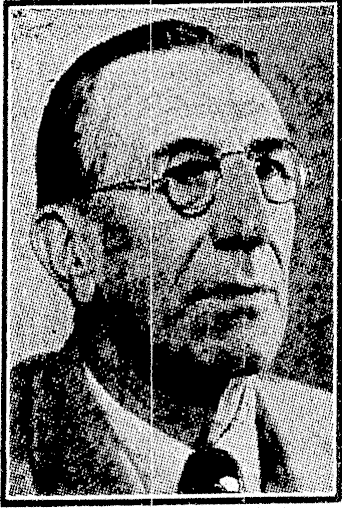
THE DAYS OF IGNORANCE
Evening Star, Issue 22570, 11 February 1937, Page 7
https://paperspast.natlib.govt.nz/newspapers/ESD19370211.2.35
Europe before the war (review of novel Europa)
MODERN AUTHORS
Taranaki Daily News, 3 April 1937, Page 17 (Supplement)
https://paperspast.natlib.govt.nz/newspapers/TDN19370403.2.130.43
Robert Briffault, whose novel “Europa” was translated into nine languages, was born in London of English-French parentage. His father was in the French diplomatic service, and, as a boy, most of his childhood and youth was spent on the Continent, especially in Italy, a fact reflected in the gorgeous Roman scenes of his novel.
His parents were well acquainted with the titled Englishmen and Russians and other Continental aristocrats who spent much of their time in Italy, and much of the earlier part of “Europa” is drawn from the author’s experiences and observations as a youth and young man. Mr. Briffault has gained fame as a philosopher of history and a recent work, “Breakdown,” was warmly praised. “Europa” is his first novel.
BOOKS
Northern Advocate, 27 May 1939, Page 2 (Supplement)
https://paperspast.natlib.govt.nz/newspapers/NA19390527.2.143.7
BOOKS By “Caxton”
Is The Empire In Disastrous Decline?
Explosive Criticism
The Decline and Fall of the British Empire, by Robert Briffault. (Simon and Schuster, New York, 1938). A borrowed title, but startling enough. And the book itself? None of the impressive scholarship and massive dignity of Gibbon’s sonorous prose, but plausible and facile in historical reference and provocative in a modern style of debunking satire and explosive criticism. A disturbing and ruthless challenge to cherished notions and conventional complacencies about the present and future of the British Empire.
Unbroken Record of Blundering
Does it really think the Empire is falling to pieces? Or is the title just a “seller,” a squib set off in the gathering darkness to attract attention? There are some passages, here and there, highly coloured, exaggerated, and violently emotional, that certainly look like squibbery.
On England’s reputation for muddling through, for instance: “It would be difficult to point in the history of any other nation, except that of Catholic Spain, to a more unbroken record of blundering, blind political incapacity and total lack of intelligent prevision.”
On this, concluding an exposure of what he regards as the humbug and trickery of the Chamberlain peace negotiations: “The triumph was complete. Not only did the Fascist and ‘democratic’ confederates save a peace that had never been in serious danger, but — what was more important — they saved themselves. They did so at a moment when the fortunes of all Fascists and fascisizing plotters stood at the lowest ebb of direct jeopardy. Instead of collapsing, as they were about to do, the Fascist ruling gangs were raised at one stroke to the complete hegemony of Europe. Mr. Chamberlain, instead of being hanged, as there was talk of doing, became canonised as the saviour of society. The whole fictitious and fraudulent alignment of forces in super-armed Europe was instantly transformed. The Socialistic State was completely isolated and surrounded. The Japanese, who were about to contemplate committing harakiri, took on a new lease of life and ferocity. All Fascists throughout the ‘democracies,’ who had been slinking round with long faces, came out of hiding with whoops of triumph. The Right Dishonourable Neville Chamberlain, from being an object of universal indignation and execration, shared by the Tories who retained vague memories of professions of honour associated with old school ties, ascended amid the hysterical acclamations of the British public to a seat on the right hand of God — to whom Mr. Chamberlain was currently assimilated.”
Writing Like an Earthquake
The author would probably defend this impetuous style by contending that English ideas have so long grown used to ruts that one must write like an earthquake to get them reconsidered in the light of new facts. A little more than a century ago Cobbett would have recognised a style, not altogether unlike his own, in the enterprise of rousing his fellow countrymen to see things for themselves; and Mr. Douglas Reed, of “Insanity Fair,” would probably applaud the intention if he did not approve the expression.
War Decorations Resigned
Meantime, who is the author? He is not unknown as a vigorous and daring writer who published “Breakdown” and “Europa.” Like Lawrence of Arabia he felt unable to wear decorations won in the war, and returned them to the King last October, after Munich. He was London born, of British parents, educated partly abroad. At 18 he came to New Zealand and subsequently practised as a surgeon in Auckland. In the war he served at Gallipoli and in France and was twice decorated. About 10 years ago he gave up medicine for literature, writing “The Mothers,” “Rational Evolution,” and “Sin and Sex,” though “Europa” was the first of his books to make a wide stir.
That the present book is published by Simon and Schuster of New York is not without a negative significance, worth considering in reaching a valuation of its contents. Quincey Howe, of that publishing house, and the author of a smart book, partly anti-English, writes an introduction, which the book didn’t need, and to which it contributes nothing worth space, except the announcement that Briffault wanted to call the book “The English Myth,” but Simon and Schuster substituted the “Decline and Fall” title. They would!
Candidly, it is a book well worth reading, provided you are not afraid to look in the face opinions that are probably violently upsetting to a lot of conventional ideas. If our belief in the Empire, or anything else, the Chamberlain tradition for instance, rests on insecure foundations it is just as well to find it out. If it doesn’t, we are none the worse for re-examining those foundations, and exercising a sensible critical reserve in what we accept or reject of Mr. Briffault’s literary assault upon traditional positions.
Where Freedom Falters
This book traces the rise of the Empire to its glittering and glorious supremacy. Then piles up the evidence of decline.
“In 1896 England was prepared to go to war with France because a handful of men had hoisted the French flag on the White Nile. In 1936 she acquiesced, almost without a protest, in the complete control by Italy of the sources of the Blue Nile. In 1900, England sent a military expedition to China when her missionaries and officials were menaced by the Chinese; to-day she stands by while her officials are shot and the whole of her interests are threatened by the Japanese. In 1904 the accidental hitting (Oh la la! Mr. Briffault) of an English trawler, in a fog, by a gun fired from the Russian Baltic fleet, brought on a crisis in which the Daily Mail argued that if the Baltic fleet fired by accident it was not to be trusted on the high seas: and if it did not fire by accident, the incident was an act of war and a weak and wanton act . . . a crime unparalleled in human history.”
To-day, Mr. Briffault stingingly comments, “British ships, both merchant and of the Royal navy are bombed and sunk, British seamen and bluejackets killed, and not only does England take no step, but her ministers refuse to answer questions on the subject in the House of Commons.”
Craft, But Not Statecraft
Following this our author reviews the mismanagement that, in his view, has marked England’s wars; her loss of colonies, her support of slave-owning states, and her muddling through in South Africa are some mentioned.
Then he argues: “Her resources have been supplemented by an undoubted ability of astute dealing. England has been, and is, clever, ingenious, cunning — but she is not intelligent. To be intelligent is to understand . . . English politicians have seldom understood either the premises or the ultimate consequences of the schemes and intrigues which their cunning has carried to a successful, but limited issue. They have excelled in craft, but not in statecraft.”
Desperate Situation To-day
“These politicians are to-day applying, to cope with a situation more desperate than any with which England has been confronted, the traditional methods of English policy, and using the hollow prestige of England’s former influence, but without the resources by which these were formerly backed. England identifies herself to-day in her policy with the lawless barbarism of Germany and of Japan which she has fostered, and with that of Italian gangsterdom, because she sees in their uncontrolled and unscrupulous violence a weapon against the menace of social change, and above all, against the Socialist State which permanently represents that dreaded menace. She is raising up for herself an opponent which has already brought her to the verge of destruction.”
“Such is the fierceness of her reactionary passion and her dread of fundamental issues that she subordinates all other interests. Such a policy is not prudence or foresighted astuteness; it is a desperate gambler’s recklessness.”
The Last Grim Clash
Mr. Briffault completes the picture with a forecast of the attack on England led by Germany. He calls it “the deathblow to an already crippled England.” A full supply of submarine and aerial torpedoes would embarrass the ruler of the waves’ invincible navy; the howitzers standing ready in their concrete gunpits round Gibraltar would go off; England’s macaroni friend would rush his troops from Libya over the Egyptian frontier and would block the Suez Canal.
France, hanging on like grim death to her precious English alliance, would think twice before fulfilling her obligations under it; the Dominions have already given notice that they must not be expected to rush a second time to the defence of the Empire with the enthusiasm of 1914; the U.S.A. would meditate (lovely word) over non-intervention and in any case find it difficult to do anything about it; the U.S.S.R., not committed to defending England, would stand by and grin to see the capitalistic world going up in smoke.
And so Mr. Briffault drops a welcome curtain on his tragic drama and its torrid ending. The lights are being switched off. Let’s be going.
ROBERT BRIFFAULT “Fandango” is another of Mr Briffault’s studies in contemporary history — a novel on the theme of the decline and decay of the aristocracy.
Southland Times, Issue 24177, 13 July 1940, Page 8
https://paperspast.natlib.govt.nz/newspapers/ST19400713.2.72.3.1
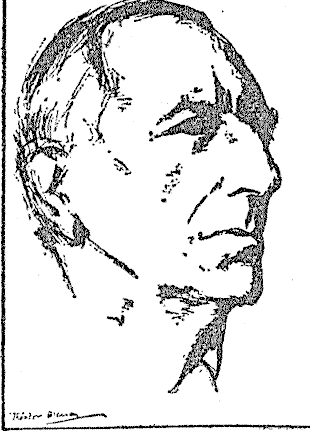
WRITER AND SURGEON
Otago Daily Times, Issue 26955, 15 December 1948, Page 7
https://paperspast.natlib.govt.nz/newspapers/ODT19481215.2.64
Writer and Surgeon
Death of Mr. R. S. Briffault
LONDON, Dec. 13. Rec. 8 p.m.
The death is announced of Mr. Robert Stephen Briffault, aged 72, a writer and surgeon. He went to New Zealand in 1894 and retired from medical practice after the Great War.
GISBORNE LINKS: DECEASED AUTHOR R. S. BRIFFAULT
Gisborne Herald, Volume LXXV, Issue 22821, 16 December 1948, Page 6
https://paperspast.natlib.govt.nz/newspapers/GISH19481216.2.86
GISBORNE LINKS: DECEASED AUTHOR R. S. BRIFFAULT
News of the death of the former New Zealander and world-famous author, R. S. Briffault, was noted with interest yesterday by many Gisborne people who knew of the late Mr. Briffault’s family connection with this district.
The deceased author, who as a young man qualified as a surgeon and practiced in New Zealand from 1894 to 1914, served with the British Expeditionary Force as a member of the Medical Corps, taking his discharge overseas at the conclusion of hostilities. He made London his headquarters for a time, but later became a cosmopolitan, with connections in many European countries and a more or less permanent resident in Nice, on the Mediterranean Coast.
Gained World Fame
He gained world fame with his novels, and scored decisively with “Europa” and “Fandango,” neither of which could be regarded as a tribute to the existing order or to the social background of bourgeois government. His books were published by a leading American house, and their reception in official circles in Britain were decidedly cold, but he had a wide public which read with keen relish his sardonic analyses of prevailing conditions.
It was perhaps characteristic of the cleavage between his literary themes and his general outlook that the novelist, having himself known the hardships and dangers of war service on Gallipoli, and in France and Belgium and having taken issue with the British authorities on their foreign policy and their conduct of international affairs, should yet have approved wholeheartedly participation by his son and grandson in the First and Second World Wars.
Trapped in Paris
At the outbreak of the Second World War he was residing at Nice, and it was not until the fall of France was imminent that he endeavoured to reach England. En route across France he was trapped in Paris by the German invaders and he spent the rest of the war years as a refugee civilian there, suffering severely by reason of the exhaustion of his immediate funds and his inability to tap the substantial resources which his royalties were piling up in the United States.
He was seriously undermined in health when the liberation enabled him to return finally to Great Britain. He had never fully recovered from the ordeal of the occupation years. He leaves two children, Mrs. J. Hackleburg, residing in Valparaiso, Chile, and Mr. H. L. Briffault, now of Whakatane, but formerly for many years employed by the Gisborne office of the Public Works Department. Two of his grandchildren are members of the Public Service in Gisborne.
EIRE’S BREAK WITH CROWN
Press, Volume LXXXIV, Issue 25680, 17 December 1948, Page 7
https://paperspast.natlib.govt.nz/newspapers/CHP19481217.2.60.21
Death of Robert Briffault
London, December 13.
The death has occurred of the author, Robert Stephen Briffault, at the age of 72. Mr. Briffault, who retired from practice as a surgeon after the First World War, published his most recent novel, “The New Life of Mr. Martin,” in 1948.
His earlier works included “Sin and Sex” (1931), “Breakdown” (1932), “The Decline and Fall of the British Empire” (1938), and the novels, “Europa” (1935), “Europa in Limbo” (1937), and “Fandango” (1940).
Mr. Briffault went to New Zealand in 1894. In the First World War he served on Gallipoli, in France, and in Flanders, and was twice decorated.