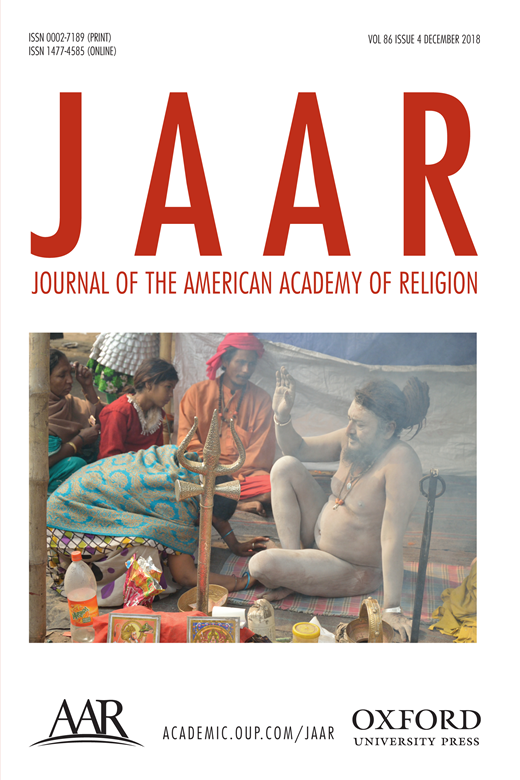
Guru-disciple relationship, charismatic power
The author suggests that this desire to be close to sources of religious power coupled with the authoritarian power relationship between guru and disciple create social situations that are readied forums for sexual abuse.
Guru Sex: Charisma, Proxemic Desire, and the Haptic Logics of the Guru-Disciple Relationship
Journal of the American Academy of Religion, Volume 86, Issue 4, December 2018, Pages 953–988
Abstract
This article analyzes how the religious desire proximity to that which is believed to be a source of or a conduit for the sacred. Within the South Asian context, this desire manifests socially in devotees’ attempts to touch the guru, to be close to the guru, to eat the guru’s leftover food, to wear what the guru has worn, to sleep where the guru has slept, and so on. This article analyzes how disciplinary logics of physicality, what I call haptic logics, govern guru communities and reinforce devotees’ desire for proximity to the guru by sacralizing physical contact with the guru. The author suggests that this desire to be close to sources of religious power coupled with the authoritarian power relationship between guru and disciple create social situations that are readied forums for sexual abuse.
Notes
I argue that in the guru-disciple relationship, charismatic power is not only “built up” within the guru, but proximity to the guru becomes a coveted commodity because the charismatic power of the guru is believed to be transferred to, ingested by, and circulated among devotees. Like charisma, the successful transmission of the guru’s power (śakti) is intimately related to the recognition that fosters the guru’s success and celebrity. The felt magnetism of contemporary charismatic gurus draws others toward the source of that je ne sais qua that cultivates attraction.
Ironically, the guru’s social transgressions, including sexual transgressions, demonstrate his or her exalted status as existing outside and beyond standard social conventions. Like Weber’s charismatic authority, the guru does not conform to existing social orders, but rather radically transgresses them.34 In their idealization, gurus are not only not subject to conventions of social propriety, but also their transgressions of those conventions define their status as gurus. In many religious traditions, there are religious exemplars who exhibit “divine madness” (Ancient Greek, theia mania) or “crazy wisdom” (Tibetan, drubnyon) as a behavioral expression of their religious ecstasy and special access to the divine.